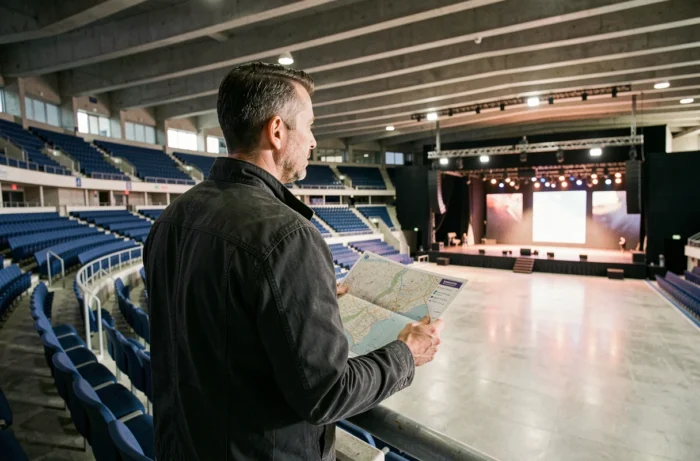
At a concert at the Accor Arena, two spectators sitting just a few meters apart can experience radically different sound quality. The ticket price category displayed on the ticket says nothing about the clarity of the mix or the separation of instruments. Choosing the best seat at Bercy Arena for exceptional sound requires understanding how sound behaves in this venue, and why certain areas offer a much clearer reproduction than others.
Sound Limiter at the Accor Arena: A Game-Changing Constraint
Before even looking at a seating plan, one must consider a technical parameter that most guides overlook. The sound levels at the Accor Arena are contractually defined and monitored by a limiter. The maximum volume and dynamics are capped, regardless of the artist.
In practice, this means that raw power will not compensate for poor placement. In a venue where sound can rise freely, a distant seat still receives a sufficient level of energy. With a limiter, poorly covered areas by the sound system remain behind, with no possible recovery through power.
This contractual framework makes the choice of seat even more critical. A spectator in the upper side stands will perceive a more muffled sound than someone in the lower stands facing the stage, and the limiter prevents the sound engineer from pushing the system to correct this gap. Understanding the placement in the pit at Bercy Arena helps explain why proximity to the main speakers does not always guarantee the best sound quality.

Lower Stands Facing the Stage: The Area Where the Mix Remains Most Clear
You may have noticed that some concerts seem “muddled,” with voices drowned out by the bass? This phenomenon largely depends on your position relative to the main speaker clusters.
Feedback from spectators on recent seasons converges: the perceived sound quality is more stable in the lower and intermediate stands facing the stage. In these areas, the signal arrives directly, without excessive bouncing off the side walls or ceiling. The voice remains distinct, and the instruments separate.
In contrast, the upper stands and side blocks close to the stage accumulate problems. The angle relative to the speakers becomes shallow, and indirect sound (reverberations) takes over the direct sound. Several spectator reviews describe the acoustics as “poor” or “muddled” in these areas, even though their ticket price category was high.
What the Ticket Price Category Doesn’t Indicate
The price of a ticket at Bercy reflects visual proximity to the stage, not acoustic quality. A side block classified as premium can offer a decent view of the artist while delivering degraded sound. The seating plan displayed by ticket offices does not indicate either the orientation of the speakers or the areas of appropriate coverage by the system.
For sound, it is better to have a slightly set-back central lower stand than a side seat close to the stage. The moderate elevation of the lower stands corrects the listening angle and reduces unwanted reflections from the pit floor.
Stage Configuration at Bercy: The Factor No One Chooses
The stage layout profoundly alters the sound distribution in the venue. A classic front stage concentrates the speakers towards the front. A stage with a catwalk shifts some of the sound coverage towards the center. A 360-degree configuration completely redistributes the system.
- In a front stage, the lower stands facing the stage remain the best sound option. The rear blocks receive delayed and less defined sound.
- In a stage with a catwalk, the intermediate side stands gain in quality, as additional speakers cover the sides. The “ideal listening point” shifts towards the center of the venue.
- In a 360 configuration, the mix is designed to be homogeneous, but areas directly under the suspended clusters receive clearer sound. Seats high up facing a main cluster then offer better sound quality than lower off-center seats.
The problem: the exact configuration is generally not communicated at the time of ticket purchase. A few clues can help anticipate. Artists who regularly use catwalks (high-budget pop tours) often signal this in their announcements. Front rock concerts typically remain in a classic configuration in the vast majority of cases.
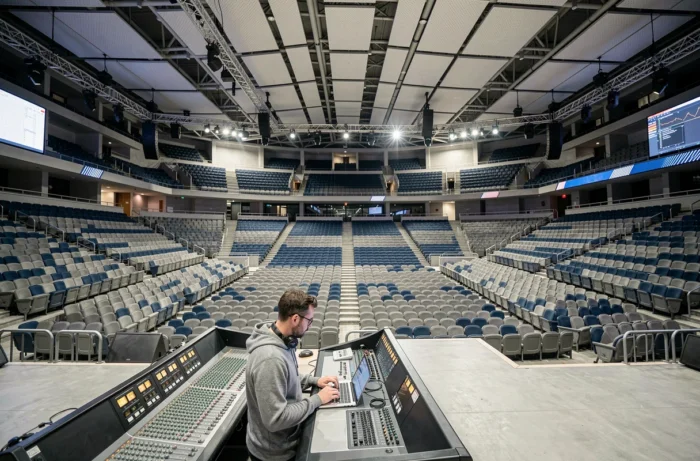
Pit at Bercy Arena: Maximum Proximity, Sometimes Sacrificed Sound
The pit attracts for immersion and physical proximity to the artist. On the sound front, the reality is more nuanced.
In the pit, you are at ground level, beneath the main firing line of the suspended speakers. The sound literally passes over your head. What you perceive comes partly from stage monitors (the speakers facing the musicians) and sub-bass (floor speakers). The result: lots of bass, less defined mids, and voices sometimes covered.
The “gold” pit, right against the stage, accentuates this imbalance. The closer you are, the more the stage monitors dominate the main mix. The classic pit, slightly set back, offers a better compromise between proximity and sound clarity, as you gradually enter the area covered by the main clusters.
Three Concrete Criteria for Choosing a Sound Seat
- Favor a position facing the stage rather than lateral, regardless of the level. The central axis corresponds to the main orientation of the speakers.
- Prefer a slight elevation (lower or intermediate stands) to a ground-level position. The listening angle in the stands captures direct sound better.
- Check the announced stage configuration before purchasing. A 360 stage redistributes the suitable areas compared to a front stage.
The best sound at the Accor Arena is not found closest to the stage, nor in the most expensive categories. It is found where the direct signal from the main speakers arrives unobstructed, with a listening angle that minimizes reverberations. A central lower stand facing the stage checks these boxes in the majority of concert configurations at Bercy.