In France, sports policy is no longer limited to funding facilities or supporting high-level performance. In recent years, public authorities and the associative fabric have structured an approach where sport becomes a fully-fledged tool for social intervention, with dedicated methods, training, and funding. Social inclusion through sport now mobilizes actors that go beyond the traditional federal framework.
Sociosportive skills: a recent professionalization in French clubs
One of the least discussed facts in the debate on sport and solidarity concerns the rise of the concept of sociosport. Since 2026, the State has been promoting an explicit policy for disseminating sociosportive skills in the sports sector, with a clear objective: to strengthen the capacity of clubs to carry out actions that promote the social integration of young people under 25.
This approach is no longer just a discourse of good intentions. It involves training sports educators in mediation, socio-educational support, and networking with social workers. Clubs then become intervention relays, capable of identifying and supporting young people in difficulty well beyond the field.
Additional resources on projects linking sports practice and solidarity action are listed on sports-solidarite.org, which brings together associative initiatives on a national scale.
The formalization of these skills changes the very profile of the supervisors. A sociosport educator does not simply lead a session: they build partnerships with local missions, social centers, or housing structures. This shift in competence redefines the role of the sports club in the network of professional and social integration.
Disability and sports practice in France: a persistent access gap
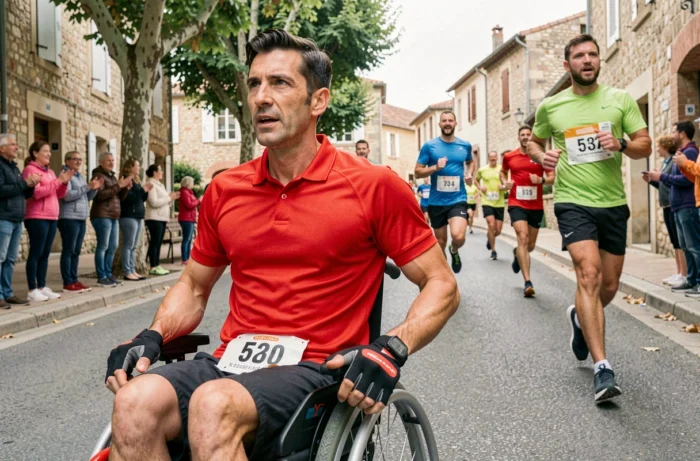
The legacy of the Paris 2024 Olympic and Paralympic Games has put parasport in the spotlight. The organization created an endowment fund aimed at financing projects for social inclusion through sport, with the ambition of demonstrating the “power of sport” on individual trajectories.
Field feedback on this point is mixed. A study by INJEP dedicated to the sports practice of people with disabilities shows that access to sport remains significantly lower than that of the general population. The obstacles are not solely material (accessibility of facilities, transportation). They also stem from a lack of training for supervisors, the scarcity of adapted time slots, and social representations that hinder engagement.
Parasport is sometimes presented as a developing medico-economic lever. The available data do not allow for a conclusion of rapid catch-up. Women’s sports practice among people with disabilities remains particularly under-documented, limiting the federations’ ability to calibrate their programs.
What concretely blocks in clubs
- The lack of dedicated slots for adapted sports in the schedules of municipal facilities, often saturated by able-bodied sections
- The absence of mandatory modules on disability in the initial training of many sports educators, despite repeated announcements
- The difficulty in maintaining stable funding for parasport sections, whose small numbers do not generate enough licenses to balance budgets
Fighting discrimination in sports: a strengthened framework but visible limits
The national plan to combat racism, anti-Semitism, and discrimination related to origin (2026-2029), led by DILCRAH, explicitly includes the sports field. Sport is highlighted as a priority intervention area, with actions targeting discriminatory behaviors in stadiums, locker rooms, and governing bodies.
At the same time, CNOSF has launched a foundation for a sport without violence, and the French Paralympic and Sports Committee has committed to addressing violence in sports. These initiatives mark an institutional handling of discrimination that goes beyond occasional awareness-raising.
However, the effectiveness of these measures on the ground remains difficult to assess. Reports of racist or discriminatory behaviors in amateur sports are rarely centralized. Small clubs, which make up the majority of the French sports fabric, rarely have trained referents or clear procedures to address these situations.
Professional integration of young people through sport: beyond discourse
The link between sports activity and youth employment is the subject of numerous programs. Initiatives like Pass’Sport, recently reopened to 6-13 year-olds with new modalities, aim to broaden the base of practitioners in low-income families. The National Sports Agency funds “Impact” project calls that explicitly target professional integration through sports practice.
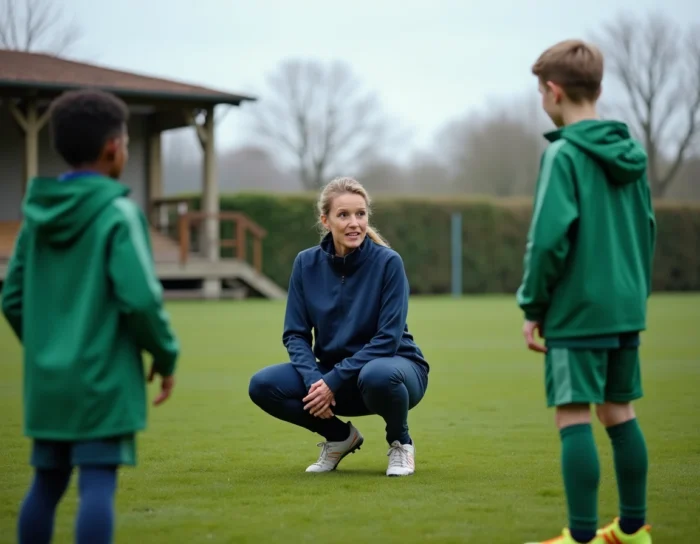
Local initiatives illustrate this dynamic. In Loir-et-Cher, a program has allowed about fifteen young people to discover sports careers, combining club immersion and support from integration advisors. This type of hybrid pathway, which articulates sports practice and professional orientation, remains minority but is gradually being structured.
What distinguishes an effective program
- A formal partnership between the sports club, the local mission, and at least one employer in the area, with mutual commitments
- Individual follow-up that extends beyond the duration of the sports program, to support the transition to employment or training
- Regular evaluation of positive outcomes (access to employment, resuming training), and not just the number of participants
Solidarity through sport cannot be decreed in a national plan: it is built club by club, educator by educator, with means that often remain precarious. Recent regulatory advances (sociosport, anti-discrimination plan, dedicated funds) provide a framework. The open question is about the ability of the local associative fabric to transform these frameworks into sustainable practices, without solely relying on public funding cycles.