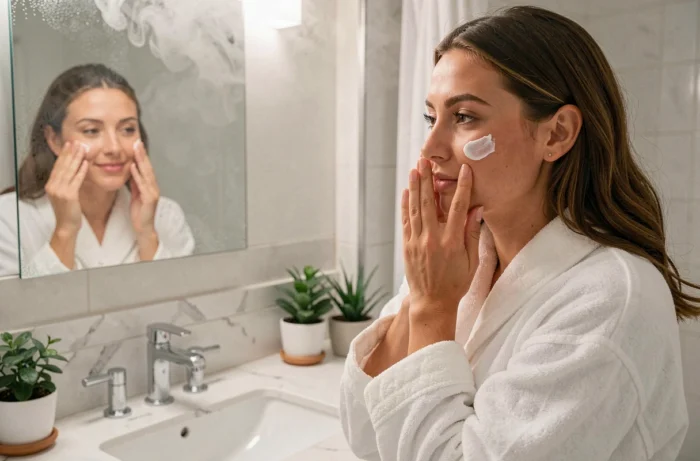
The cosmetics market in France is undergoing a period of rapid transformation. Between the new European regulations on hazardous substances and the rise of cosmetic minimalism, daily beauty routines no longer consist solely of applying a moisturizer morning and night. Taking care of one’s beauty and well-being now requires understanding what the products we apply to our skin actually contain.
Endocrine disruptors and PFAS: what’s changing in your cosmetic products
Classic articles on daily beauty rarely touch on regulation. However, the topic deserves particular attention, as the products available on the shelves will significantly evolve in the coming months.
The delegated regulation (EU) 2023/707 has introduced new hazard classes for endocrine disruptors in the CLP regulation. The labeling obligation for the substances concerned will come into effect on May 1, 2025, with reclassification deadlines set for November 1, 2026 for substances already on the market.
In France, a text is set to prohibit, starting January 1, 2026, the manufacture, import, and marketing of products containing PFAS, including cosmetics. Only unintentional traces will be tolerated, with thresholds established by decree. Sunscreens, long-lasting products, and certain waterproof treatments are directly affected by these restrictions.
In practice, checking the INCI list of a product before purchase is becoming a relevant reflex. Platforms like the one offered at https://soins-beaute-sante.fr/ help navigate the different categories of care while considering these developments.

Beauty routine and cosmetic minimalism: fewer products, better choices
The trend towards cosmetic minimalism, championed by dermatologists who warn about the risks of skin overload, is gaining ground. The principle is simple: reduce the number of products applied to limit cumulative chemical exposure.
An overloaded routine (cleanser, toner, serum, cream, oil, SPF, primer) multiplies interactions between ingredients. Some dermatologists recommend limiting oneself to three or four products per routine, favoring short formulations.
Criteria for selecting a daily care product
- The INCI list does not exceed twenty ingredients, indicating a formulation focused on useful actives rather than unnecessary texturizers and preservatives
- The product is suitable for your skin type (oily, dry, combination, sensitive), as an unsuitable treatment can worsen skin imbalances instead of correcting them
- Hydration remains the foundation: a well-formulated moisturizer covers most daily facial needs, even before considering a serum or oil
- Sunscreen is a standalone product, not an optional bonus, even in winter or on cloudy days
This approach does not mean giving up on skincare. It involves choosing each product with a specific intention rather than stacking steps out of habit.
Blue light from screens and skin aging: state of knowledge
Prolonged exposure to blue light emitted by smartphones and computers is the subject of increasing research. Some studies suggest a link between this exposure and pigmentation phenomena, particularly in individuals with darker skin types.
The available data does not allow for a definitive conclusion regarding the extent of blue light’s impact on the skin compared to solar UVs. However, the effect of screen light in the evening on circadian rhythm and sleep quality is better documented. Indeed, disrupted sleep accelerates skin aging and reduces the skin’s regenerative capacity.
Limiting screen exposure in the hour before bedtime thus acts on two simultaneous levers: the quality of rest and, indirectly, skin health. Anti-blue light filters integrated into devices are a first measure, but they do not replace reducing screen time in the evening.

Hydration and nutrition: fundamentals often misunderstood
Skin hydration does not solely depend on creams applied on the surface. The skin’s hydrolipidic barrier is also maintained by internal water intake and certain specific nutrients.
Fatty acids, found in vegetable oils (olive, rapeseed, walnut), contribute to the flexibility of the cell membrane. Antioxidants from colorful fruits and vegetables help protect against oxidative stress. Nutrition affects the skin from the inside, where cosmetics only reach the superficial layer.
What classic beauty routines overlook
Most guides focus on external actions. However, a few internal parameters deserve equal attention:
- The quality of sleep directly influences cell renewal, as the skin primarily regenerates during deep sleep phases
- Chronic stress stimulates cortisol production, which can trigger acne, eczema, or psoriasis flare-ups in predisposed individuals
- Regular physical activity improves skin microcirculation, promoting a radiant complexion and the elimination of cellular waste
These factors do not replace a suitable skincare routine, but without them, even the best cosmetic products yield limited results.
Beauty and daily well-being rely on a balance between what we apply to our skin and how we treat our body as a whole. The ongoing regulatory changes will gradually eliminate the most problematic formulations from the market, making this a particularly favorable time to reassess the contents of one’s skincare kit.