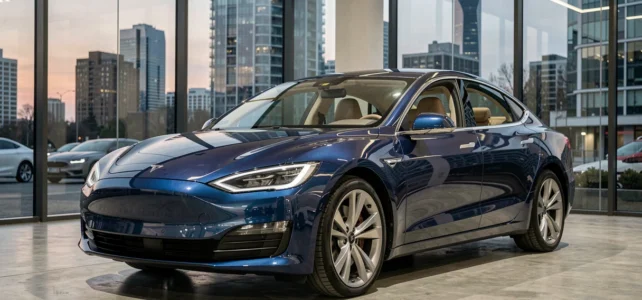
The European automotive market is undergoing a phase of technological fragmentation. Data from the first half of 2026 published by ACEA outlines a landscape where conventional hybrid powertrains now hold the largest market share in the European Union, ahead of gasoline, diesel, and fully electric vehicles taken separately.
European Automotive Market 2026: The Shift Towards Multi-Technologies
The ACEA figures for the first half of 2026 confirm a structural shift. Gasoline and diesel combined represent less than 30% of new registrations in the EU. The remainder is divided among conventional hybrids, plug-in hybrids, and 100% electric vehicles.
This distribution changes the usual framework for analysis. Media coverage often pits thermal against electric, as if the market is polarizing around two blocks. The conventional hybrid, less expensive to produce and purchase than a plug-in model, attracts customers who do not want to give up thermal engines nor invest in a home charging station.
Following automotive news on Auto World allows one to gauge how this redistribution of market shares affects the industrial strategies of manufacturers, from Renault to Volkswagen.
The share of 100% electric vehicles reached 20.7% of new registrations in the EU in the first half of 2026. A symbolic threshold, but one that masks significant disparities between countries. Scandinavian markets pull the average up, while Southern and Eastern Europe remain largely focused on hybrids and thermal vehicles.
European Regulations on End-of-Life Vehicles: What Changes Are Coming?
The European Union adopted a new regulation in July 2026 that merges the old End-of-Life Vehicles directive and the 3R directive (reduction, reuse, recycling). The text introduces a little-commented obligation: every new car must have a circular identity card.
This digital passport will document the composition of materials, the recyclability of components, and the history of parts. The stated goal is to structure the automotive recycling sector in Europe, a field where the available data does not yet allow for measuring the gap between reported recycling rates and industrial reality.
Impact on the Used Car Market
For used vehicle buyers, this circular identity card could eventually serve as a traceability certificate for parts. Used car professionals, already facing the issue of battery diagnostics on electric vehicles, see it as a complementary tool.
The recent partnership between Autoviza and Bib Batteries, announced at the end of August 2026, illustrates this trend. The alliance between a specialist in history reports and a battery diagnostics expert anticipates the needs of a structuring electric used car market.
Chinese Car Manufacturers in Europe: Beyond Price, the Question of Network
MG, BYD, Xpeng, and Jaecoo are now regularly featured in monthly registration rankings in France. Geely is preparing its entry. The question in 2026 is no longer whether these brands will establish themselves, but how they will sustain themselves over time.
The purchase price is only part of the equation. The density of the after-sales network, the availability of spare parts, and the quality of warranty follow-up determine customer loyalty. On these three criteria, the situation varies from one brand to another:
- MG relies on the existing network of multi-brand dealers, with already significant geographic coverage in France
- BYD invests in its own showrooms in major urban areas but remains less present in rural areas
- Xpeng and Jaecoo still largely operate on a pre-order basis, with an after-sales network under construction
In contrast, historic European manufacturers (Volkswagen, BMW, Audi, Renault) maintain a structural advantage in the network. Dacia, positioned in the same price segment as some Chinese models, has had to start offering discounts on Duster and Bigster to maintain its competitiveness.
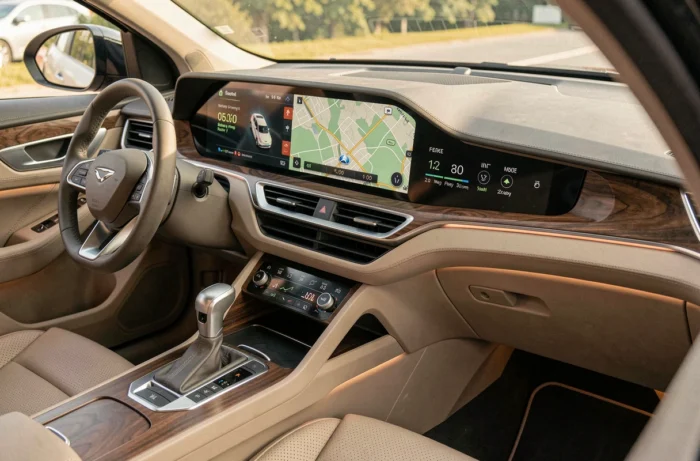
Automotive Safety: New European Standards Effective July 2026
Since July 2026, new safety rules apply to all new vehicles sold in the European Union. These obligations, stemming from the General Safety Regulation, include several now-mandatory features:
- Autonomous emergency braking system capable of detecting pedestrians and cyclists
- Event data recorder (black box), which stores vehicle parameters in the seconds leading up to an accident
- Intelligent speed adaptation system, which alerts the driver to speed limit violations
These features were already present on high-end models, but their generalization to all production changes the manufacturing cost of entry-level vehicles. The available data do not yet allow for precise quantification of the impact on list prices, but several manufacturers have already adjusted their prices upward on the cheapest models.
Consequences for the Used Car Market
Used vehicles prior to this regulation are not subject to the obligation for compliance. An increasing technological gap is being created between the existing fleet and new cars, which could accelerate the depreciation of recent but non-equipped models.
The European automotive market in 2026 is thus viewed through several simultaneous lenses: the recomposition of powertrains, the arrival of new players, the tightening of regulations on safety and recycling. None of these trends operates in isolation. It is their combination that reshapes the decisions of buyers, manufacturers, and regulators for the years to come.