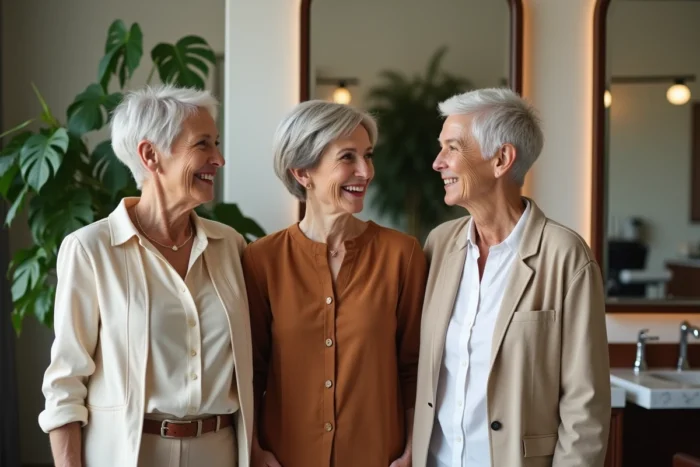
Choosing a short haircut after 70 is not just about face shape. Hair density, wearing glasses, and the actual styling time each morning weigh just as much, if not more, in the success of a hairstyle. Here are ten concrete cuts designed for these daily constraints.
1. Textured pixie with volume on top
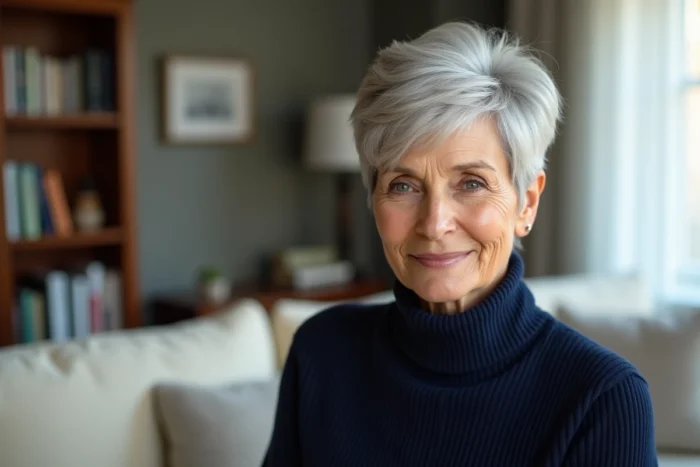
When hair loses density at the temples but remains decent on the top of the head, the textured pixie redistributes volume where it matters. Keep two to three centimeters on top, tapered with a razor to create movement, and shorten the sides significantly.
With thick-framed glasses, this cut completely clears the arms and avoids the “hair stuck under the glasses” effect. Styling takes less than five minutes: a small amount of texturizing wax worked through with fingertips is enough.
Opinions vary on this point, but very fine hair can appear sparse if the cut is too short on top. It’s better to keep a bit more length to simulate density.
2. Tapered micro bob under the ears

The micro bob stops just below the earlobe. This length allows for a short hairstyle for women over 70 without sacrificing the ability to tuck a strand behind the ear, a practical gesture when wearing hearing aids.
Tapering at the ends lightens the mass without reducing coverage. On white hair, the micro bob captures light and gives a naturally silky appearance. A quick blow-dry with a round brush once a week maintains the shape between salon visits.
3. Graduated boyish cut at the nape
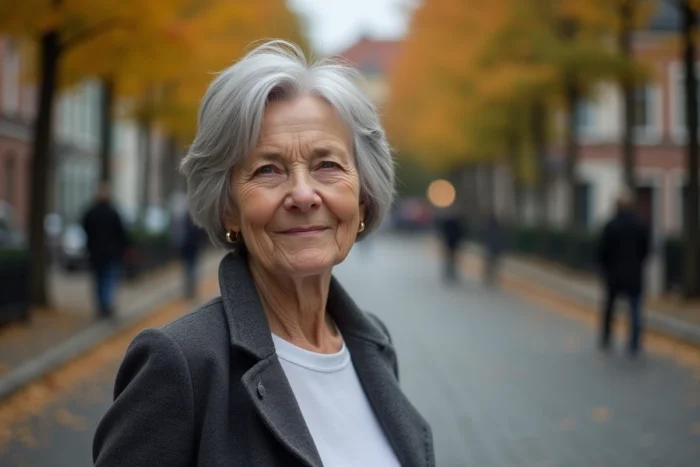
The graduated boyish cut gradually clears the nape rather than in a block. This avoids a harsh line that grows out poorly and requires a salon visit every three weeks. The graduation visually elongates the neck and softens the profile’s features.
For wearers of fine, rectangular glasses, this cut balances the geometry of the face with soft lines at the back. In terms of maintenance, natural drying gives a perfectly acceptable result for everyday wear.
4. Short angled bob with side fringe
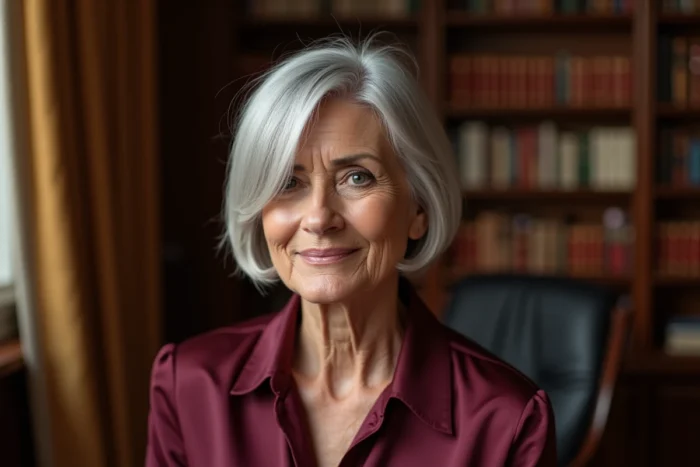
Longer in front than in the back, the angled bob creates a flattering asymmetry. The side fringe, longer on one side, draws attention to the eyes and partially masks a wide forehead or receding hairline.
This cut is particularly suitable for medium-fine to normal hair. On very fine hair, the front ends can appear thin. A volumizing spray applied at the roots partly compensates for this issue.
5. Bixie cut: the compromise between bob and pixie

The bixie combines the length of a short bob with the lightness of a pixie. It keeps volume and texture on top and sides while maintaining an easy-to-maintain cut. It’s a relevant choice when hesitating between cutting very short and keeping some length.
With round or cat-eye glasses, the bixie adds movement around the frames without hiding them. Styling takes a bit more time than a pure pixie, but a quick run of fingers through the textured strands replaces blow-drying most days.
6. Pixie with tapered curtain bangs
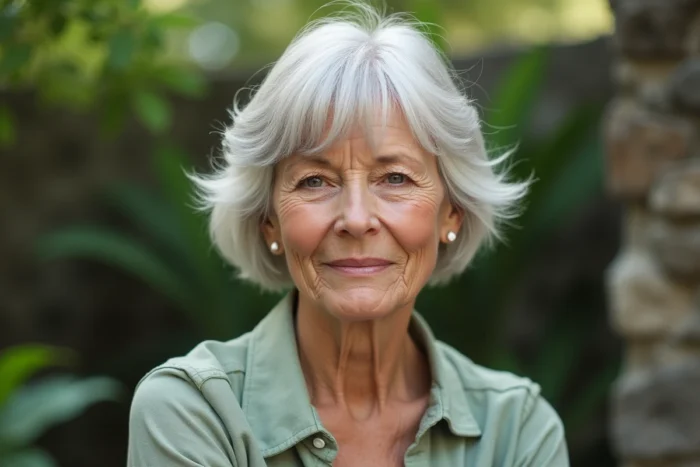
The curtain bangs frame the face by naturally parting in the middle of the forehead. On a pixie base, they add softness without weighing down the cut. This type of fringe works well with fine-framed glasses, as it falls on either side of the arms.
For fine hair, a very tapered fringe is requested: if too thick, it flattens the top of the head. The rejuvenating effect comes from framing the gaze, which draws attention to the eyes rather than the contour of the face.
7. Natural curly short cut
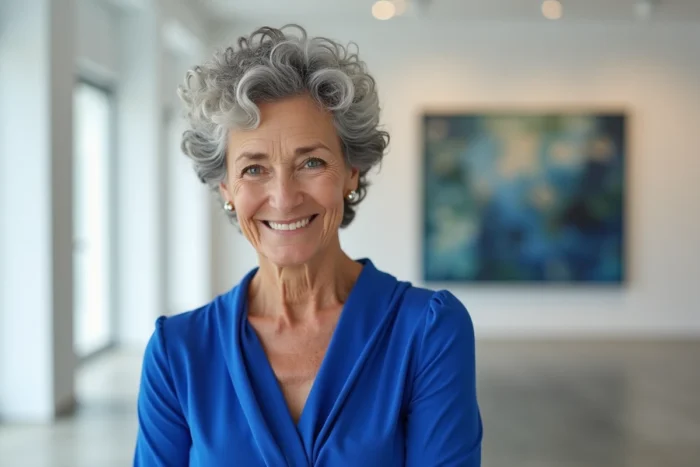
Hair that becomes more wavy with age finds an ally in the short curly cut. Let the curls form freely at five to eight centimeters in length, sculpting the overall shape with scissors to avoid a mushroom effect.
Styling is limited to a curl activator applied to damp hair. No blow-drying, no straightening. For women who wear wide glasses, the curls create a visual balance with the bulky frames.
8. Short straight bob with light straight bangs

The straight chin-length bob combined with straight bangs creates a clean structure that modernizes the look. This cut requires hair to be dense enough for the line to remain full. On very fine hair, straight bangs can give a sparse appearance.
The criteria to check before choosing this cut:
- At least medium hair density at the front of the head to support the bangs
- Texture should be rather smooth or slightly wavy, as curls break the straight line
- Salon visits every four to six weeks to maintain the geometry
9. Short tapered cut with long top and short sides
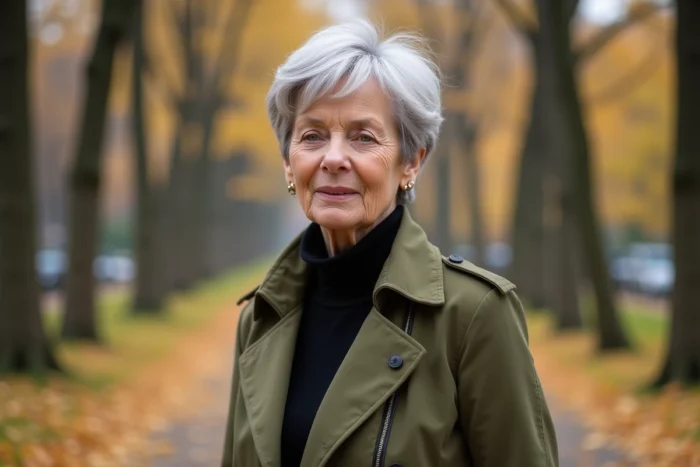
The sides and nape are shortened, but a more generous length is kept on top, worked into tapered strands. This contrast adds dimension and allows styling the top forward, backward, or to the side depending on the day’s mood.
This style adapts to almost all shapes of glasses, as the short sides clear the arms while the top adds character. A few points to consider:
- If the hair is very soft, a light styling product maintains volume on top
- Regrowth is less visible than with a strict bob, which spaces out salon visits
- Air drying works if one accepts a more relaxed finish
10. Very short “silver crop” cut
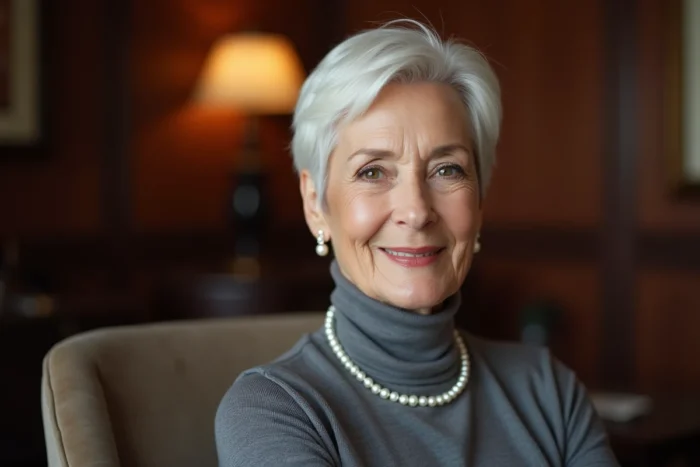
The silver crop focuses entirely on the natural color of white or silver hair. The cut is very short all over, uniform, with no bangs or marked graduation. It’s the quickest cut to style: just run your hand through the hair and you’re done.
It highlights the structure of the face and accessories, including glasses. On a round face, one might ask to keep a millimeter longer on top to slightly elongate the silhouette. This style requires a certain confidence, but it completely frees one from daily styling constraints.
The ideal cut after 70 depends less on a trend than on three concrete realities: what the hair allows, what the glasses impose, and the time one is willing to spend each morning. Testing a gradual change, such as moving from a micro bob to a pixie, remains the safest method to find the right balance.