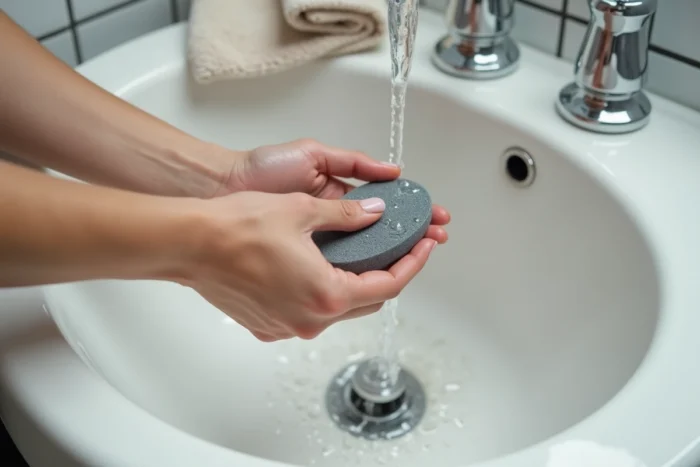
Pumice stone accumulates organic residues in its pores from the first use. Without a cleaning protocol suitable for its porosity, it becomes a bacterial reservoir in just a few days. We recommend a methodical approach that takes into account the volcanic structure of the material to extend its lifespan and ensure impeccable hygiene.
Brushing the pores: the technique that mainstream articles ignore
Rubbing the pumice stone against itself or soaking it for a long time in water are two counterproductive reflexes. Prolonged soaking expands the pores without dislodging the embedded residues, and rubbing stone against stone erodes the useful surface.
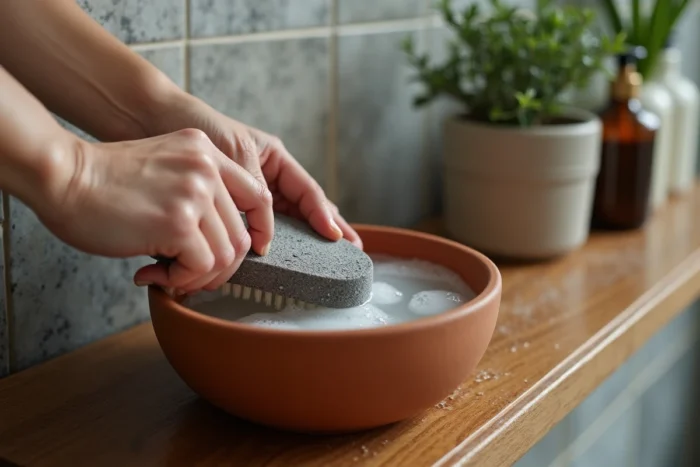
A brushing under warm soapy water with a soft brush (like a baby toothbrush) remains the most effective method for extracting dead skin trapped in the cavities. The soft bristles penetrate the pores without breaking the porous structure.
We observe that this step, performed systematically after each use, significantly reduces the residual microbial load. Knowing how to clean a pumice stone according to this principle radically changes its longevity and abrasive effectiveness.
The key action to remember: brush under a stream of warm water for about thirty seconds, focusing on the most recessed areas. Rinse with clear water, then pat dry with a clean cloth before drying.
Choosing soap and pH: protecting the porous structure of pumice stone
A poorly maintained pumice stone crumbles, discolors, and loses its abrasive power within weeks. The choice of cleaning product plays a direct role in this degradation.
Use a mild soap with a neutral or slightly alkaline pH. Acidic products (white vinegar, descaling cleaners) attack the mineral matrix of the volcanic rock. Highly alkaline products, such as concentrated bleach, weaken the walls of the pores and accelerate crumbling.
Compatible products and products to avoid
- Diluted liquid Marseille soap in warm water: regular cleaning without altering the stone.
- Low concentration liquid black soap: suitable for more thorough weekly cleaning, especially if the stone has yellowish deposits.
- Acidic products (vinegar, pure lemon, descaler): to be avoided, they gradually dissolve the rock and make the surface smooth, thus useless.
- Fragrant shower gel or superfat soap: lipid residues clog the pores and reduce abrasiveness.
The logic is the same as for maintaining decorative natural stones: the porous material requires a cleaner that does not alter its mineral composition.
Drying and storage: the mistakes that turn the stone into a bacterial nest
Microbial proliferation on a pumice stone mainly occurs after use, during the drying phase. A damp stone stored in a warm, poorly ventilated bathroom cabinet develops mold and odors in just a few days.
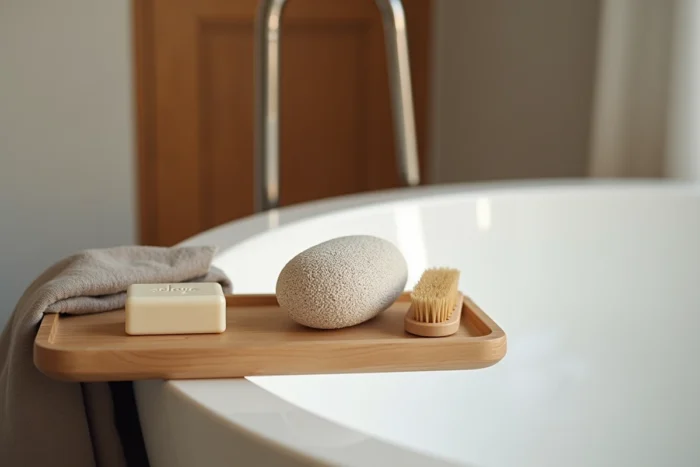
Complete air drying in a well-ventilated area is non-negotiable. We recommend placing the stone on a rack or a slotted soap dish, never flat on a waterproof surface. Air must circulate under and around the stone.
Avoid the edge of the bathtub, often in contact with stagnant water. A hook near a window or a suspended basket in the shower works better. In winter, when natural ventilation decreases, positioning the stone near a dry heat source speeds up the process.
Signs that the stone needs to be replaced
A persistent odor after cleaning, a surface that has become smooth to the touch, or areas that crumble when brushed indicate that the stone has reached the end of its life. No cleaning can restore a pumice stone whose alveolar structure is clogged or eroded.
Frequency of use and maintenance of pumice stone: the right rhythm
The most common mistake is using the pumice stone daily. A frequency of two to three times a week at most is enough to maintain smooth feet without stimulating callus production. Too frequent abrasion has the opposite effect: the skin, being aggressed, thickens its cornified layer in response.
Another often overlooked point: the pumice stone should never be applied to skin with cuts, open cracks, or active fungal infections. The porous material absorbs pathogens and redistributes them during the next use, even after superficial cleaning.
Weekly maintenance protocol
- After each use: rinse with clear water, quick brushing with a soft brush, air drying.
- Once a week: cleaning with diluted Marseille soap, thorough brushing of the pores, prolonged drying.
- Every month: visual inspection of the surface, checking for any residual odor and maintaining roughness.
This protocol adapts to the actual frequency of use. A stone used only once a week requires less intensive maintenance, but complete drying remains constant.
The lifespan of a well-maintained pumice stone far exceeds that of a neglected one. Replacement occurs when roughness decreases, not when the stone changes color. A slight grayish tint is normal and does not indicate contamination if the cleaning protocol is followed.