Every year, several thousand high school graduates consider a preparatory year in art before attempting the entrance exams for higher education schools. This step, often presented as a natural progression, is not mandatory.
Public preparatory schools recruit outside of Parcoursup, with applications opening as early as January, which shifts the timeline compared to most post-bac programs. Private preparatory schools, on the other hand, operate according to their own admission rules and fee structures. The choice between these two worlds depends as much on the daily work rhythm as on the reputation of the institution.
RNCP Title and Certifier: The Criterion That Brochures Do Not Highlight
Before even comparing pedagogies or the displayed success rates, a simple reflex can help eliminate fragile programs: check whether the school targeted after the preparatory year (or the preparatory school itself, when it issues a title) is indeed backed by a title registered with the RNCP. Several recent guides emphasize this point as a decisive criterion for credibility and professional integration.
An RNCP title specifies a precise level, an identified certifier, and a deadline. If any of these three pieces of information are missing from the school’s website, caution is warranted. Some private programs highlight partnerships or internal labels that hold no value in the job market or for further studies.
This check is all the more useful given that the landscape of art schools mixes public institutions under the supervision of the Ministry of Culture, consular schools, and fully private structures. Knowing how to identify what constitutes a state-recognized diploma versus what is a home certificate helps avoid financing a year that leads to nothing transferable.
Public or Private Art Prep: Cost, Selection, and Daily Work Rhythm
Public preparatory schools for higher art education have a particular profile. Their cost remains significantly lower than that of private structures. They boast a success rate of about 90% in entrance exams for their students, according to data reported by several specialized sources.
Those looking to succeed in their art prep after the bac benefit from comparing not only tuition fees but also the weekly workload and the format of support. In a public preparatory school, classes often consist of around thirty students, with individualized follow-up. Private preparatory schools may offer larger groups, sometimes compensated by additional workshops or extended access to facilities.
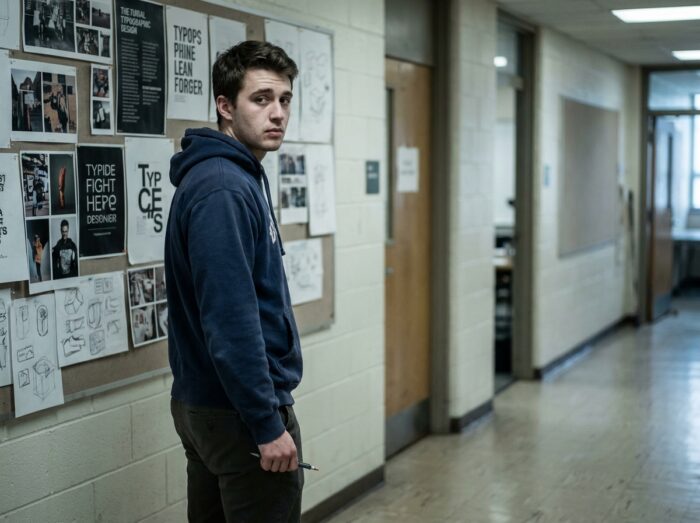
The work rhythm is an underestimated factor for success. A year of art prep is nothing like the pace of high school. Personal production (portfolio, plastic projects, documentary research) occupies a significant portion of time outside of classes. Choosing a prep that matches one’s capacity for autonomy helps avoid burnout in December or, conversely, boredom in a structure that is too supervised.
What the Academic Record Really Weighs
Public art preparatory schools do not select based on high school grades. The academic record is, in most cases, of no importance. Selection is based on an eligibility test (a topic to prepare in a few days) followed by an interview. What the juries are looking for are unique profiles and a personal approach, not a transcript.
This approach opens the door to candidates in reorientation or returning to studies. Exemptions exist for candidates without a bac who have a professional background, which clearly distinguishes these preparatory programs from traditional post-bac pathways.
Art Prep, DNMADE, or Direct Entry into School: Three Timelines, Three Logics
The preparatory year is not the only path to a higher art school. Three options are available after the bac, each with its own timeline and requirements:
- The art prep (public or private), outside of Parcoursup, with applications starting in January and exams at the end of the year. It generally does not issue a diploma but prepares a portfolio and project presentation.
- The DNMADE (national diploma of arts and design professions), accessible via Parcoursup, which combines a degree program over three years with progressive specialization. It constitutes a structured alternative for those who want a diploma from the first year.
- Direct entry into an art school through exams, possible right after the bac. Several directors of public preparatory schools actually advise candidates to attempt the exams in parallel, even if it means joining the prep only in case of failure.
The choice between these three paths depends less on academic level than on the degree of maturity of the artistic project. A candidate who is already filling sketchbooks and knows precisely which field to pursue (illustration, product design, scenography) can attempt direct entry. A candidate who is unsure between several disciplines would benefit from going through an exploratory year.
A Common Trap: Confusing Art Prep with CPGE
Preparatory classes for grandes écoles (CPGE) in the literary or scientific fields have nothing to do with art prep. Confusion persists, particularly among parents. Art preps are not CPGE: they do not provide automatic university equivalences, do not follow the same regulatory framework, and do not appear on Parcoursup. Confusing the two amounts to comparing programs that do not adhere to the same objectives or rhythms.
Check the Rhythm Before Signing: Questions to Ask During Open Days
Open days remain the best time to assess whether a prep matches one’s own rhythm. A few points deserve to be asked directly to teachers or students currently in training:
- How many hours of supervised classes per week, and how many hours of personal work are expected in parallel?
- Is the follow-up individual (assigned tutor) or collective (group corrections)?
- Do students have access to workshops outside of class hours, in the evening or on weekends?
- What is the format of the support for exam preparation: interview simulations, portfolio reviews, or total autonomy?
These questions help distinguish highly supervised structures, suited for those coming from a traditional high school, from preps that allow for a large degree of initiative, more suited to profiles already autonomous in their artistic practice.
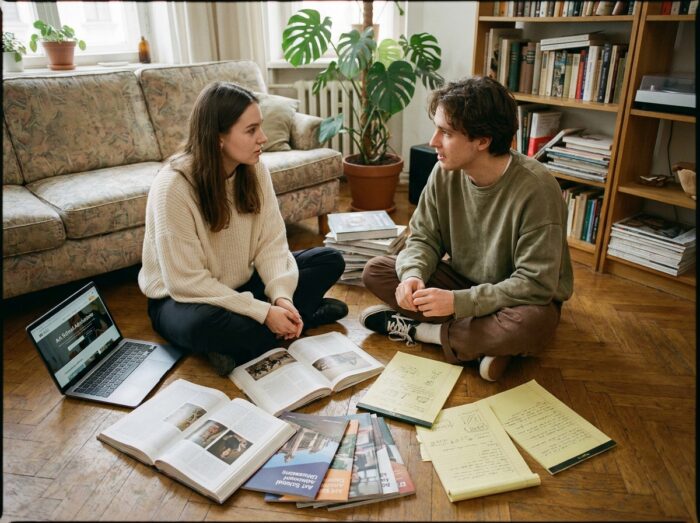
The work rhythm in art prep remains a blind spot in usual comparisons. Two preps with the same success rate in exams can offer radically different experiences depending on whether they impose thirty hours of weekly attendance or require fifteen with intensive personal work. Choosing a prep for its rhythm as much as for its name helps avoid dropouts during the year and hasty reorientations.