The 2026 housing trends share a common point: they reject showcase decor in favor of materials that withstand everyday life. We observe a clear shift from cool palettes to earthy harmonies, furniture designed for multiple functions, and home automation that disappears into the walls. The challenge is not to follow these directions, but to adapt them to a real budget, manageable maintenance, and a lifespan that exceeds the season.
Durability of trendy materials: what maintenance really reveals
Travertine, stoneware, large-format terrazzo, and solid wood with visible grains dominate the mood boards. Their appearance is spectacular in photos, but their performance in use varies significantly.
Travertine, porous by nature, requires initial waterproofing and then regular re-treatment to resist stains in the kitchen or bathroom. Waxed concrete, very present in renovation projects, remains sensitive to micro-cracks if the substrate has not been properly prepared. A poorly installed trendy material ages faster than a well-maintained classic.
We recommend prioritizing the rooms. Reserving natural stone for dry areas (living room, hallway) and opting for stone-effect ceramic in wet rooms allows for aesthetic preservation without multiplying maintenance constraints. Bamboo and rattan, favored for furniture, do not handle prolonged humidity well: they are suitable for a living room, much less for an uninsulated veranda.
Several topics related to these trade-offs between style and practicality are regularly addressed in the articles from Ma Maison Info, with a focus on feedback after installation.
Colors for 2026: going beyond the color chart to think about light
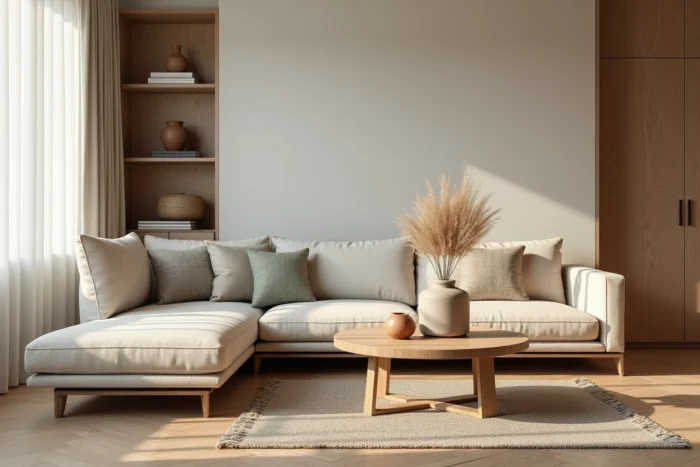
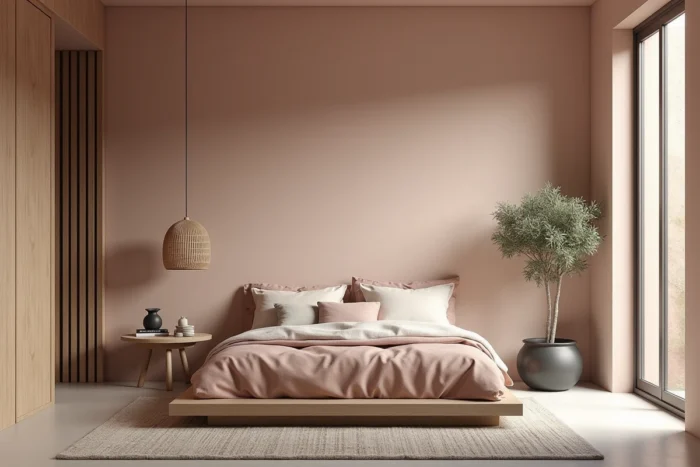
The 2026 palette revolves around beige, sand, terracotta, sage green, and blue-green. These shades work remarkably well in naturally well-lit interiors. In a north-facing room with a single window, moss green or deep burgundy darkens the space to the point of making it oppressive.
Any trendy color must be tested in the actual light of the room, not under store lighting. A sample painted on a piece of foam board, moved around the room at different times of the day, avoids unpleasant surprises.
The “color drenching” technique (walls, ceiling, and woodwork in the same shade) produces a very successful enveloping effect in small rooms with high ceilings. However, it flattens low volumes. Before painting a ceiling in terracotta, we advise checking that the ceiling height exceeds the threshold where the compression effect becomes bothersome.
- South or west-facing rooms: terracotta, sand, sage green – the warm light amplifies their depth without dulling them.
- North or east-facing rooms: prefer light beige, warm off-white, or soft blue-green that better captures cold light.
- Passage rooms (hallway, entrance): a single saturated shade in color drenching works well because the visual exposure time remains short.
Modular interior layout: zoning without partitions
Multifunctional living is no longer an emerging trend; it is a structural constraint. Remote work, even part-time, requires dividing a living room or bedroom into distinct zones without putting up walls.
Zoning relies on three levers: light, furniture, and floor materials. A change in flooring between the office space and the relaxation area (hardwood versus thick carpet, for example) is enough to mark a visual boundary. A low-hanging pendant light above a work table creates a bubble without any physical separation.
Dual-function furniture (bench with storage, foldable desk, bookshelf-partition) allows for gaining usable square meters. But beware of the quality of the mechanisms: a low-end murphy bed squeaks after a few months and eventually stops folding. Investing in hardware rather than finishing extends the lifespan of this type of furniture.
Integrated home automation: real budget and installation pitfalls
The 2026 trend in home automation aims for invisibility. Lighting, heating, and security systems are integrated into walls, ceilings, or furniture. Aesthetics benefit, but installation costs rise as soon as you move from basic wireless to a wired embedded system.
In renovations, the installation of conduits for wired home automation is often the most underestimated item. A surface-mounted connected light can be installed in an hour. The same embedded system requires chases, patching, and repainting. The budget can triple.
For a trendy interior without blowing the budget, we recommend focusing home automation on two high-impact functions for daily life:
- Automated zone lighting (presence detection, intensity variation based on the time) improves comfort and reduces consumption.
- Room-by-room connected thermostat, compatible with existing radiators, allows for fine control of heating without heavy work.
- Connected locks and motorized shutters provide real comfort, but their cost-effectiveness is only justified if the home is occupied full-time.
Home decor trends: avoiding the catalog effect
An interior where every element follows the same trend produces an artificial result. Mixing eras and styles remains the best protection against this pitfall. A washed linen sofa (very 2026) placed on a vintage kilim rug creates a visual tension that a total look never achieves.
Limiting “trendy” pieces to two or three per room and keeping the rest in timeless basics (white, natural wood, black metal) allows for evolving the decor without replacing everything. A terracotta cushion and a rattan light fixture are enough to anchor a living room in the current trend. The day these shades go out of style, the replacement cost remains minimal.
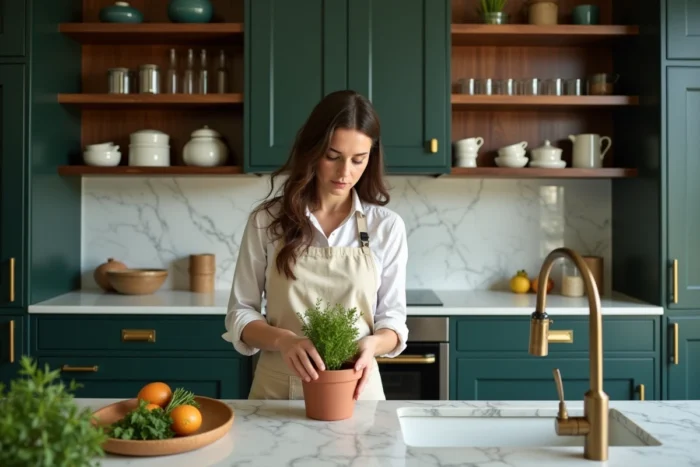
The most common pitfall concerns the kitchen. Colorful fronts (deep green, midnight blue) are appealing on social media, but a kitchen is difficult to replace. Opting for neutral fronts and shifting color to the backsplash, handles, or countertop offers the same ambiance with much greater reversibility.
The 2026 housing and decoration trends share a coherent guiding principle: raw materials, warm shades, adaptable spaces. The difference between a successful interior and a dated decor in two years lies less in the choice of trends than in their dosage and the quality of implementation.