
The same garment worn with or without accessories does not produce the same effect. The difference rarely lies in the price of the chosen piece, but in its material, cut, and ability to last beyond a season. Fashion accessories deserve to be evaluated based on specific criteria, not just their appearance in the window.
Material Durability: Compare Before Buying a Fashion Accessory
Competitors focus on style. Few address the actual durability of an accessory in daily use. The shoe industry, for example, is now organized around standardized test packs: repeated flexing, sole abrasion, adhesion retention after prolonged use. These protocols allow for documenting the durability of a piece long before it shows signs of wear.
This reasoning applies to all leather or textile accessories. A leather belt whose dye chips off after a few weeks is not a good investment, even when sold at a low price. The durability of an accessory is verified by the material, not by the label.
Browsing the entire collection on Caro Bleue Violette allows you to compare pieces designed for regular use, with materials whose longevity is part of the specifications.
| Criterion | Entry-level Accessory | Handcrafted or Durable Accessory |
|---|---|---|
| Abrasion Resistance | Low (fine synthetic materials) | High (full-grain leather, dense weaves) |
| Repairability | Almost none (glued seams) | Possible (saddle stitching, replaceable parts) |
| Color Retention | Rapid fading in sunlight or from friction | Mass-dyed or natural patina |
| Cost over 3 Years (including replacement) | Higher (frequent replacement) | Often lower (one piece is sufficient) |
This table summarizes a simple observation: a repairable accessory costs less over time. The question of purchase price often masks the real cost of use.
Circular Fashion and Accessories: What European Regulation Changes
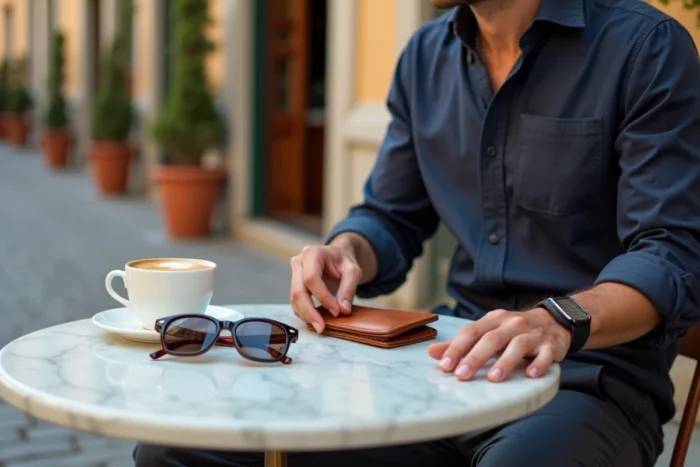
The European regulatory framework on circular fashion is transforming the design of accessories. Brands producing bags, belts, costume jewelry, or hats must rethink their materials, product end-of-life, and take-back logistics. This pressure is not trivial: it is gradually changing the available offerings in stores.
For consumers, this translates into an increasing choice of pieces made with natural or recycled materials. Bags made from vegetable-tanned leather, jewelry made from recycled metals, or scarves made from organic fibers are no longer just a niche positioning.
On the other hand, very low-cost costume accessories, made without recyclability constraints, are likely to become more difficult to market in Europe in the coming years. This regulatory shift encourages prioritizing pieces whose traceability and composition are documented.
Choosing Criteria for a Daily Accessory: Beyond Style
Selecting an accessory for daily use requires considering several parameters. Style matters, but it is not enough to guarantee long-term satisfaction.
- Versatility of the piece: a bag or watch worn every day should match at least three different outfits without effort in coordination
- Weight and comfort: a belt that is too rigid or jewelry that is too heavy ends up in a drawer, regardless of their appearance
- Accessible maintenance: a leather piece that requires specific polishing or frequent professional cleaning loses its appeal for daily use
- Repairability: check if the creator offers a repair service or if the construction allows for a visit to an artisan (visible stitching, replaceable clasp)
These criteria allow for quickly filtering a plethora of offerings. A fashion accessory that ticks these boxes becomes a true ally in daily life, not an impulse purchase.
Handcrafted Pieces and Small Series: What Craftsmanship Brings to the Look
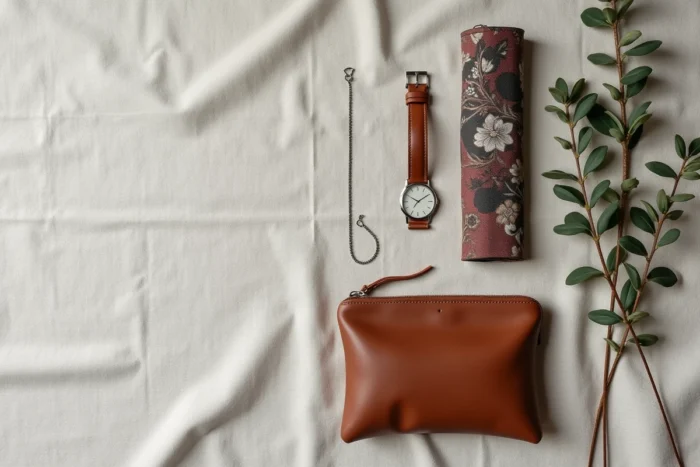
The major trends in artisanal craftsmanship show a growing appeal for unique pieces or those produced in small series. A handmade jewelry piece, a bag sewn in a workshop, or a hat molded on a form features finishes and details absent from industrial production.
This is not just a question of aesthetics. A handcrafted piece is also distinguished by its construction: sturdier seams, choice of raw materials, absence of glue in critical assemblies. The feel of slowly tanned leather is nothing like that of soft but fragile imitation leather.
The trade-off lies in the time and unit price. However, longevity often compensates for this gap. A handcrafted piece worn for five years replaces three disposable accessories over the same period.
Personalization: An Underutilized Style Lever
The personalization of accessories (engraving, color choices, initials on a bag) is gaining ground. It allows for creating a piece that looks like no other while retaining the advantages of a product designed by a professional. This service, offered by an increasing number of creators, transforms an accessory into a signature object.
The last point to keep in mind is coherence. A well-chosen accessory does not need to be flashy. It simply needs to be well-matched to the rest of the outfit, solid in its construction, and suited to the lifestyle of the person wearing it. It is this combination of material, construction, and use that makes the difference between a satisfying purchase and something that ends up in the drawer.