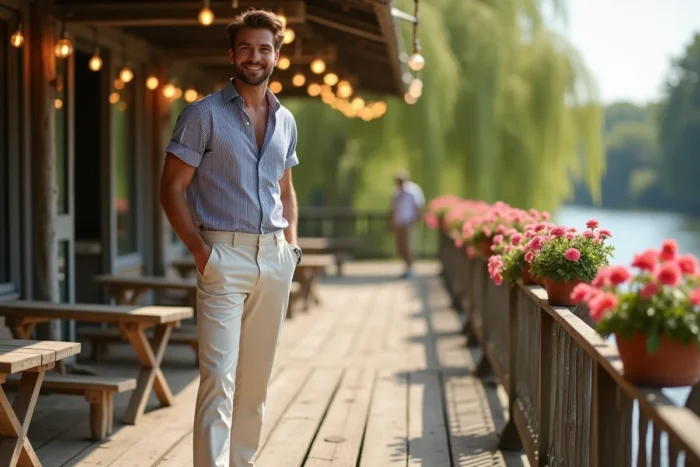
The guinguette style for men relies on a precise balance between retro flair and modern comfort. When miscalibrated, it quickly tips into stage costume territory. When well-balanced, it becomes an elegant yet relaxed outfit, suitable for country weddings, summer festivals, or a simple Sunday on the terrace. Everything hinges on three levers: the cut, the color palette, and the choice of a single strong pattern.
Cuts and body shape: the true filter of the men’s guinguette style
You may have noticed that an overly loose linen shirt gives off a pajama vibe rather than that of a dandy from the banks of the Marne? The cut is the first criterion to address, even before considering colors or accessories.
For a balanced silhouette, favor regular or tailored fit cuts. Excessive slimness disrupts the relaxed spirit of the look. Conversely, overly large pieces weigh down the silhouette and erase the structured aspect of the retro wardrobe.
Specifically, this means shirt shoulders that fall right on the bone, straight or slightly flared trousers that do not cling to the thighs. A man with a broad torso will benefit from wearing an open sleeveless vest, which elongates the vertical line. A slim man will opt for pleated trousers and a slightly fitted shirt to create volume without rigidity.
To explore men’s guinguette clothing on Concentré De Mode, this approach based on cut allows for a quick filtering of pieces that will work for your body shape.
Color palette and unique pattern: avoiding the costume effect
The most common trap in a guinguette outfit is piling on vintage references: gingham on striped suspenders, topped off with a straw boater with a red ribbon. The result: a costume for an extra.
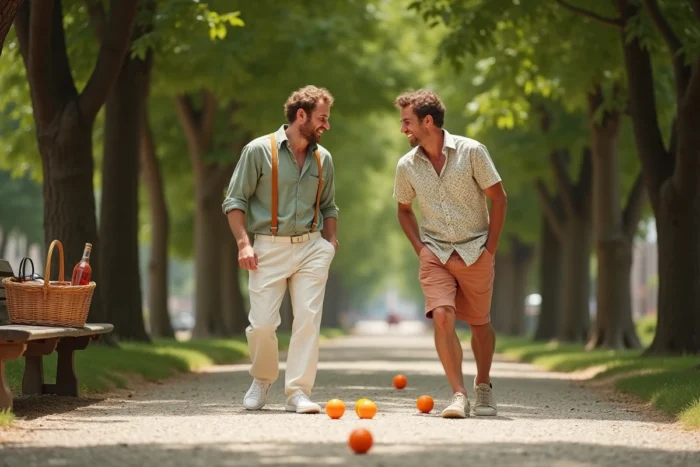
One single pattern per outfit is enough to set the retro mood. If your shirt is gingham, the trousers and vest should remain solid. If you wear pinstriped trousers, the shirt will be solid and light.
Color bases that work
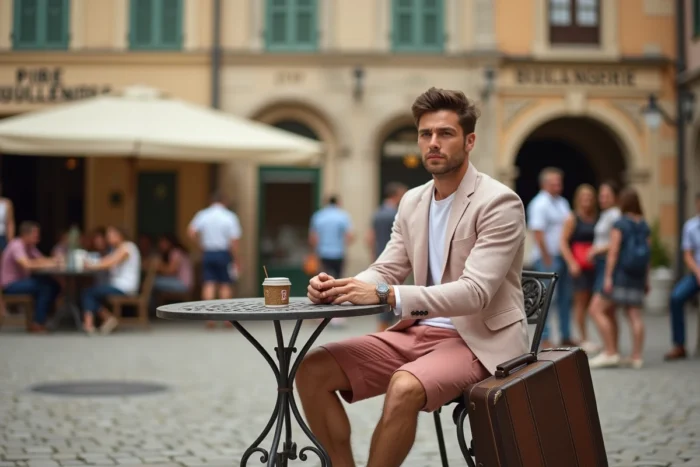
The men’s guinguette wardrobe relies on natural tones and soft pastels. Think ecru, sky blue, off-white, sandy beige, sage green. These shades evoke raw materials (linen, cotton, canvas) without forcing a nostalgic tone.
- Neutral base (beige or off-white trousers, ecru shirt) paired with a single colored accent on an accessory: terracotta pocket square, navy bow tie
- Ton-on-ton combination (sky blue shirt and navy trousers) enhanced by a braided natural leather belt
- Red and white gingham shirt worn with cream chinos and cognac leather shoes, with no other visible pattern
This rule of a unique pattern also applies to polka dots, which are very present in the guinguette aesthetic. Polka dots work better in a small format on a shirt or pocket square, not as an all-over pattern on the entire outfit.
Natural materials and responsible fashion: the current guinguette version
Linen and cotton are not just aesthetic choices. They are also breathable materials, suitable for outdoor events where the heat can rise quickly. Why this choice over synthetic blends? Because the natural drape of linen creates the relaxed movement characteristic of the guinguette spirit. A synthetic fabric remains stiff, flat, lifeless.
Several brands specializing in retro men’s wear are now betting on ethical and sustainable textiles. Linen grown in Europe, organic cotton, low-impact dyes. This responsible dimension modernizes the guinguette style without changing its visual codes. A pair of recycled linen trousers looks the same as a conventional linen pair, with the added benefit.
Care and longevity
Linen creases. This is a characteristic, not a flaw. The slightly crumpled look contributes to the relaxed charm of the outfit. Ironing a linen shirt with a hot iron for a perfect drape goes against the very spirit of the outfit.
Wash linen at low temperatures and let it air dry. It relaxes with wear and develops a patina over time, reinforcing the sought-after vintage look.
Guinguette accessories for men: a maximum of three pieces
The accessory is what distinguishes a guinguette outfit from a simple summer outfit. The straw boater remains the most identifiable piece of the wardrobe. A bow tie or clip-on suspenders add a bold retro touch.
The practical rule: never wear more than three visible accessories. Beyond that, the silhouette becomes overloaded and loses its clarity.
- Plain ribbon boater (no multicolored fancy ribbon) worn slightly tilted
- Clip-on suspenders in fabric coordinated with the trousers, not thick leather which hardens the look
- Cotton or linen breast pocket square, simply folded, in a tone complementary to the shirt
- Watch with a fine leather strap, understated, reminiscent of 1930s models without falling into imitation
For shoes, light leather derbies or suede loafers complete the outfit without overloading it. White canvas sneakers can also work in a casual context, provided they remain understated.
Hairstyle, often overlooked
Articles on guinguette style focus on clothing and ignore hairstyle. An overly styled or gelled look creates a disconnect with the relaxed spirit of the outfit. Opt for a textured and natural hairstyle, slightly tousled. A “lived-in” effect, as if the wind and dancing have done their work, fits perfectly with the guinguette aesthetic.
Ultimately, the men’s guinguette style comes down to a few precise choices: a cut suited to your body shape, a narrowed palette, a unique pattern, and counted accessories. Each piece has a role, none are decorative. It is this economy of means that separates a successful look from a costume.