
A student receives a job offer for a position in fast food, 25 hours per week. The contract mentions a fixed-term contract, an hourly rate, shifts in the evening and on Saturdays. Nothing seems unusual at first glance. The problem arises three months later when the schedules slip beyond the agreed limits and no one knows what is legal or not. Checking the legal hours for a student contract before signing is the only way to avoid this scenario.
Check the legality of a student job before signing the contract
It is often thought that the number of hours is the only variable to control. In practice, a contract can show a correct hourly volume while posing problems on other points.
The first thing to check is the nature of the proposed contract. There is no “student contract” in the French Labor Code. The employer offers a fixed-term contract, a part-time permanent contract, a seasonal contract, or temporary work. The type of contract determines the applicable rules, not the student status.
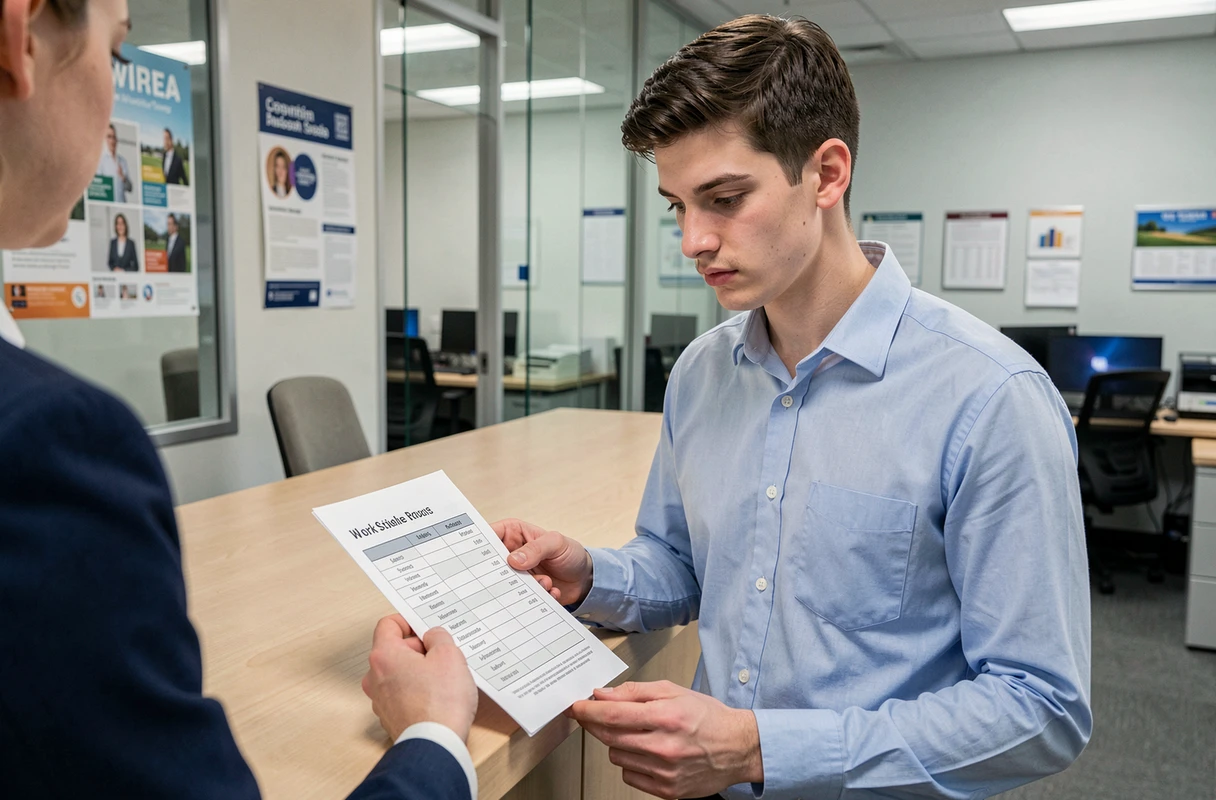
Next, we look at the weekly duration stated in black and white. For a major student, the limit remains that of common law: the legal working time per week. A part-time contract must specify the distribution of hours between days and weeks. To know the legal hours for a student contract, this distribution must be cross-referenced with the applicable ceilings.
The third often overlooked point is the clauses on complementary hours. A part-time contract may provide for a volume of complementary hours, but this is regulated. If the contract is vague on this point, it is a warning sign.
Key mentions to read on the contract
- The weekly or monthly working duration and its distribution over the days of the week, which must be explicitly stated in any part-time contract.
- The mention of the reason for resorting to a fixed-term contract (replacement, temporary increase in activity, seasonal work), as a fixed-term contract without a valid reason can be reclassified.
- The conditions for renewing the contract and the maximum duration provided, including in case of extension.
Annual ceiling of 964 hours for foreign students in France
For foreign students holding a “student” residence permit, the logic changes radically. The calculation is not done weekly but annually: a maximum of 964 hours. This ceiling corresponds to about 60% of the legal annual working time.
In practice, one can work more during certain weeks (during university holidays, for example) and less during class periods, provided that the total annual limit is not exceeded. The trap is that many students think in terms of weekly volume without keeping a cumulative count.
Exceeding this ceiling can lead to the withdrawal of the residence permit. An employer who makes a foreign student work beyond this limit also exposes themselves to sanctions. Therefore, before signing, it is essential to check if the proposed hourly volume, multiplied by the duration of the contract, remains below this annual threshold.
Calculating remaining hours
If one has already worked on another contract during the year, it is necessary to add up all the hours worked since the anniversary date of the residence permit. Returns vary on the exact counting method (calendar year or date of issuance of the permit), but the prefecture generally bases itself on the validity period of the permit.
Keeping pay slips and tracking hours each month remains the most reliable method to avoid unintentional exceeding.
Rest and breaks: rules that make a schedule illegal despite a good total of hours
A schedule can comply with the contractual hourly volume and still be illegal. This is the case when rest obligations are not respected.
For an adult employee, the minimum daily rest is set by the Labor Code. A student who finishes at midnight and resumes at 7 a.m. the next day is potentially in violation, even if their weekly total remains within limits. The daily rest between two working days cannot be compressed on the grounds that the employee is a student.
The weekly rest adds to this constraint. A student cannot work seven consecutive days, even on short shifts.
Minor students: stricter hour limits
For minors aged 16 to 17, the restrictions are stricter. Night work is prohibited (with very regulated sector-specific exceptions). Overtime is prohibited. The daily working duration is capped below that of adults.
A 15-year-old minor still subject to compulsory schooling can only work during school holidays, for limited periods, and only on light work. The employer must obtain specific authorization.
- Prohibition of night work for minors, regardless of the duration of the student contract.
- No overtime possible before the age of 18.
- Daily working duration reduced compared to adult employees, with more frequent mandatory breaks.
Common mistakes regarding student contracts and possible recourse
The most common mistake on the employer’s side is the absence of a written contract for a fixed-term contract. Without a written document, the contract is presumed to be a full-time permanent contract, which completely changes the obligations of both parties.
Another classic mistake: changing schedules without respecting the notice period provided in the contract or by the collective agreement. A student who organizes their schedule around their classes cannot be imposed a schedule change overnight.
On the student side, the main mistake is not checking the consistency between the signed contract and the actual schedules worked. One accepts undeclared overtime, does not contest a one-time excess, and the accumulation becomes problematic at the end of the period.
In case of dispute, the labor court remains competent, even for a student on a fixed-term contract. Keeping every schedule, every pay slip, and every written exchange with the employer forms the basis of a solid case. A poorly drafted or poorly executed student contract can be contested with the same tools as any employment contract.