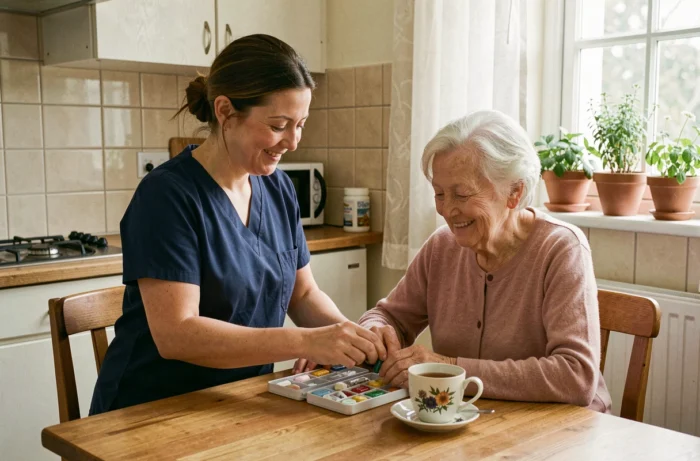
France has a growing proportion of elderly people living alone or experiencing progressive loss of autonomy. In response to this observation, a set of services has been structured to allow seniors to remain in their homes for as long as possible. However, the landscape of home support is undergoing a period of budgetary tensions that raises questions about the sustainability of the model.
Home social assistance for seniors: a decrease that changes the game
While public discourse highlights home care as a priority, financial resources do not always keep pace. According to the DREES, social assistance for the elderly at home is decreasing for the first time since 2020 in 2025. This shift occurs in a context where aid for disabled individuals continues to increase.
This discrepancy raises a direct question: can daily support services (meal delivery, housekeeping, teleassistance) continue to operate at the same level if public funding declines? For families, the risk translates into a higher out-of-pocket expense, which can be difficult for retirees with modest incomes to absorb.
The “Aging Well” law of April 8, 2024, provides for a multi-year programming of autonomy policies, but feedback from the field varies on this point: between the legislative framework and its concrete translation in departments, the gap remains significant. Several online platforms allow for the identification and comparison of Seniors du Monde services tailored to each situation, facilitating family orientation in this changing context.
Home support for seniors: beyond housekeeping
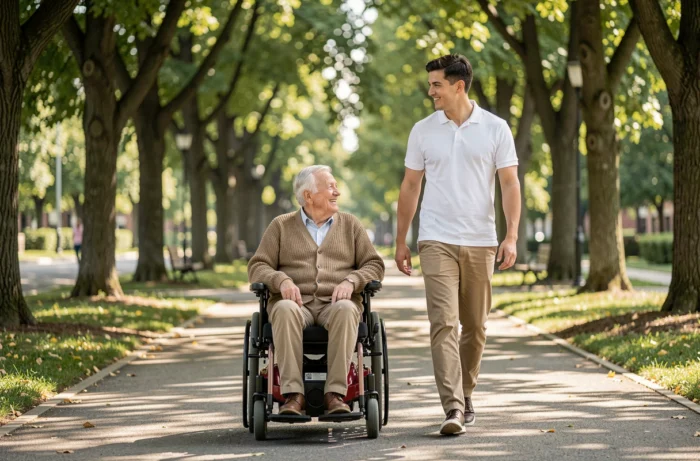
When discussing services for the elderly, the first image that often comes to mind is that of housekeeping or shopping assistance. The reality encompasses a much broader spectrum, and some needs remain underestimated.
Nursing care and medical coordination
Home Nursing Services (SSIAD) perform technical acts (dressings, injections, treatment monitoring) prescribed by the attending physician. Their role goes beyond medical gestures: they serve as a link between the hospital, the general practitioner, and the family. Coordination among caregivers remains the weak link in home care, especially in rural areas where healthcare professionals are scarce.
Teleassistance and security devices
Teleassistance systems (bracelets, pendants, fall detectors) allow for alerts to be triggered in case of a problem. These devices have evolved: some now integrate geolocation for individuals with cognitive impairments. The monthly cost varies depending on the operators, but part of it can be covered by the Personalized Autonomy Allowance (APA).
Meal delivery and combating malnutrition
Malnutrition affects a significant portion of seniors living alone and constitutes an aggravating factor for loss of autonomy. Meal delivery at home serves a dual function: nutritional, of course, but also social, as the daily visit from the delivery person often represents the only human contact of the day.
Funding for senior services: APA, departmental aids, and out-of-pocket expenses
The APA remains the main funding lever for individuals experiencing loss of autonomy classified in GIR 1 to 4. Its amount depends on the degree of dependency assessed by a departmental medico-social team. In contrast, individuals classified in GIR 5 or 6, considered relatively autonomous, do not have access to it and must turn to other systems.
Among the complementary aids:
- The Representative Allowance for Household Services (ARSM), granted by certain departments to seniors not eligible for the APA, covers part of the hours of home assistance
- The Home Return Aid after Hospitalization (ARDH), funded by pension funds, temporarily covers post-hospital support services
- The tax credit for employing a home worker, which allows for the recovery of half of the amounts spent within an annual limit
Combining multiple systems is possible but rarely simple. Administrative procedures deter many families, and information remains scattered across departmental websites, pension funds, and CCAS.
Social isolation of seniors: a need that traditional services do not cover
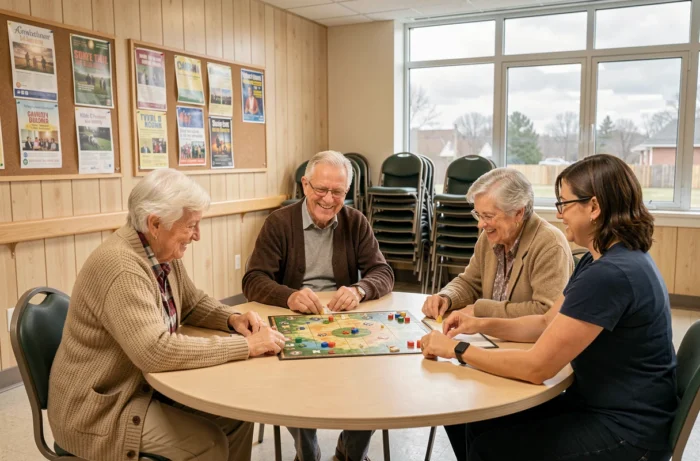
Home assistance programs focus on physical and medical needs. Social connection, however, remains the neglected aspect of support. Accompanied outings, adapted cultural activities, and support groups for caregivers exist, but their territorial coverage is very uneven.
Local initiatives are attempting to fill this gap. Some municipalities fund volunteer “friendly visitors.” Associations offer collective activities in assisted living residences or nursing homes. Maintaining an active social life slows down the loss of autonomy in a documented manner, making it a matter of prevention as much as well-being.
Family caregivers also need support. Several email or in-person support programs are being developed to help them manage the mental and administrative burden associated with caring for a dependent loved one.
Aging well at home: a model under pressure
The majority of seniors wish to live in their own homes. Services exist, financial aids too, but the system relies on a fragile balance between public funding and private out-of-pocket expenses. The decrease in social assistance noted by the DREES in 2025 and the still partial implementation of the “Aging Well” law show that the long-announced shift to home care is not yet consolidated.
For families, the priority remains to accurately map the needs of the elderly relative, identify the available funding from the department and pension fund, and then choose providers whose service quality is verifiable. The journey is rarely linear, and anticipation often makes the difference between smooth support and crisis management.