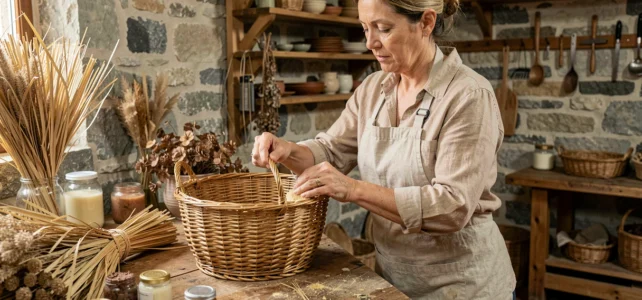
Artisanal vegetable gold is not a metal. It is a natural fiber, derived from golden grass (capim dourado) or other grasses, woven and sometimes coated with a thin layer of gold or protective resin. This plant origin radically changes the maintenance rules: the classic methods applied to solid gold or gold-plated jewelry can irreversibly degrade the material.
Understanding the exact nature of the piece you are wearing, whether it is set, patinated, or gold-plated, is a prerequisite for any cleaning action.
Vegetable fiber, gold plating, and patina: what generic advice overlooks
Most jewelry care guides assume that the piece is metallic. Warm water, mild soap, microfiber cloth: this routine works on 18-carat gold. On a piece of artisanal vegetable gold, it poses several concrete problems.
The vegetable fiber absorbs moisture. Soaking, even briefly, can cause it to swell, change its hue, or weaken the weaving. If the piece is gold-plated on a vegetable base, water seeps between the metal layer and the organic support, accelerating delamination.
Patinated artisanal jewelry presents another difficulty. The patina, intentionally applied by the artisan to give an aged or nuanced appearance, disappears when in contact with slightly acidic products like white vinegar or lemon juice, two “home remedies” often recommended for classic gold. A piece set with stones or decorative elements made of wood, wax, or brass complicates matters further, as each material reacts differently.
To know how to care for artisanal vegetable gold without risk, you must first identify the precise composition of the piece: solely vegetable base, gold plating, presence of resin, type of setting.
Caring for artisanal vegetable gold: actions suited to each finish
Care varies depending on the finish of the jewelry. Grouping all pieces under the same protocol is akin to treating a raw wood piece like a varnished piece.
Raw or natural vegetable gold
The untreated fiber retains its golden shine thanks to its natural structure, which reflects light. A soft, dry cloth is sufficient to remove dust. In case of visible dirt, a very slightly damp cloth (wrung out as much as possible) passed quickly, followed by immediate air drying, limits risks.
Products to avoid on raw vegetable gold:
- Chlorine and bleach, which attack organic fibers and cause irreversible whitening
- Perfumes and hairsprays, whose solvents can dissolve the shiny surface layer of the fiber
- Household alcohol, which dries out the material and makes it brittle after a few applications
Gold-plated on a vegetable base
Gold plating on vegetable fiber is more fragile than on metal. Repeated friction, even with a microfiber cloth, wears down the gold layer. Maintenance is limited to gentle dusting, without applying pressure. Any immersion in water should be avoided.
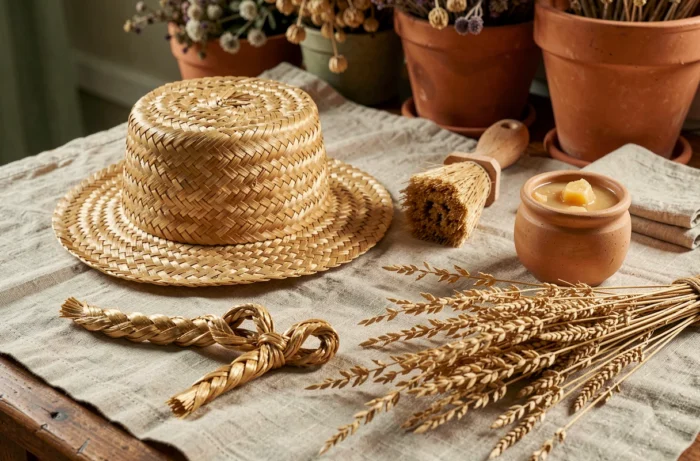
Field reports vary on the use of beeswax to nourish the fiber under the gold plating. Some artisans recommend it in a very thin layer to prevent drying out, while others advise against it as it may alter the appearance of the gold plating. In the absence of consensus, it is better to follow the recommendations of the piece’s creator.
Set pieces or those combining multiple materials
A piece of vegetable gold set with stones, combined with brass or incorporating wooden elements, requires zone-specific care. Brass is sensitive to oxidation and reacts to humidity, while the vegetable fiber fears prolonged contact with water. Clean each material separately, using a cotton swab for set areas, to avoid subjecting the whole piece to a product unsuitable for one of the components.
Storage and prevention of oxidation on vegetable gold jewelry
Storage represents an underestimated part of maintenance. A piece of vegetable gold left exposed in a humid bathroom degrades faster than a piece worn daily but stored correctly.
Store each piece separately in a fabric pouch to protect against abrasion between jewelry and limit exposure to ambient humidity. Unbleached cotton pouches are preferable to airtight plastic boxes, which can trap condensation.
For pieces containing brass or metallic elements, a small packet of silica gel slipped into the storage box absorbs excess moisture and slows oxidation. This simple action significantly prolongs the lifespan of the finishes.
Some wearing precautions to keep in mind:
- Remove the jewelry before showering, swimming, or any activity involving contact with water
- Apply perfume and sunscreen before putting on the jewelry, and wait for the product to be absorbed by the skin
- Avoid wearing it during household chores, where chemical cleaning products are omnipresent
- Do not expose the piece to prolonged direct heat (dashboard, windowsill in full sun)
When to entrust a piece of vegetable gold to an artisan for restoration
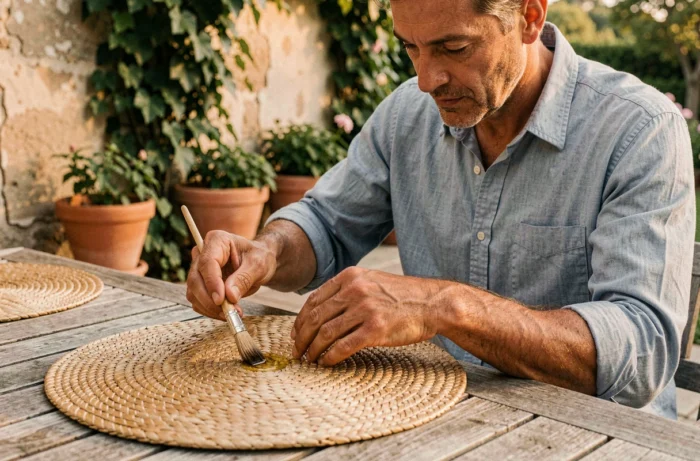
Regular maintenance has its limits. When the gold plating visibly flakes, the weaving loosens, or a stone becomes loose, only the original artisan has the expertise to restore the piece without altering its character.
The available data does not allow for defining a universal restoration frequency: it all depends on the intensity of wear, the climate, and the finish. A piece worn daily in a humid environment will show signs of wear much sooner than a piece worn occasionally.
Keeping the creator’s card or certificate facilitates any potential intervention. The artisan knows the resin used, the type of gold plating applied, and the weaving technique, all of which condition the restoration method.
Artisanal vegetable gold ages. This aging is part of the piece’s identity. The goal of maintenance is not to freeze the jewelry in its new state but to slow down avoidable degradation while respecting the living material that composes it.