Between replacing an aging boiler, repairing a leaking roof, and refreshing a dated interior, home renovation and maintenance work encompasses very different realities. Each requires distinct skills, budgets, and assistance. Comparing these areas before starting a project helps avoid blind decisions.
Energy renovation, routine maintenance, and beautification: what costs reveal
The first useful reflex is to categorize interventions by nature, then examine what separates them in terms of return on investment and access to public aid.
| Type of work | Common examples | Available aid | Impact on the DPE |
|---|---|---|---|
| Comprehensive energy renovation | Thermal insulation, heating replacement, ventilation | MaPrimeRénov’ Accompanied Pathway, CEE | Aim for a gain of at least two classes |
| Renovation by action | Installation of an insert, window replacement | MaPrimeRénov’ Action Pathway, CEE | Variable, often one class |
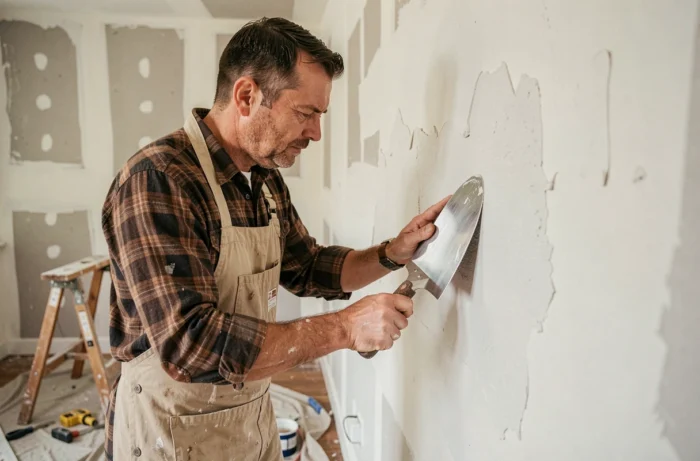
| Routine maintenance | Painting, plumbing, light façade work | No national aid | None |
| Beautification / interior design | Kitchen, bathroom, flooring | Reduced VAT subject to age conditions | None |
The “Impact on the DPE” column is crucial. Since rental of G-rated properties has been banned, energy renovation is no longer a comfort choice but a regulatory constraint for landlords. F-rated properties will follow starting in 2028.
Maintenance work (faucets, painting, minor electrical work) does not benefit from any national aid scheme. Their management therefore relies on comparing artisan quotes and verifying professional insurances. Platforms like renovetplus.com centralize this type of connection for both maintenance and renovation projects, reducing prospecting time.
My Renov’ Accompanist and Accompanied Pathway: the regulatory dividing line
As of January 1, 2024, the use of My Renov’ Accompanist is mandatory to access the Accompanied Pathway of MaPrimeRénov’. This requirement applies to extensive renovations aiming for a gain of at least two classes on the DPE.
In practice, aid is no longer granted without two cumulative conditions:
- A prior energy audit conducted by a certified RGE professional, identifying priority areas (insulation, heating, ventilation).
- An approved accompanist who follows the project from the initial diagnosis to the completion of the work and verifies compliance.
- Adherence to a coherent bouquet of work; isolated actions are not covered in this pathway.
This distinction creates two worlds. On one side, comprehensive renovations are regulated, financially supported but administratively heavy. On the other, simple actions and routine maintenance are easier to organize but entirely the owner’s responsibility.
Accompanied Pathway refocused on thermal sieves
The Accompanied Pathway is gradually reserved for properties rated E, F, or G before work. A property already rated D or better no longer has access under the same conditions. For owners of relatively recent homes, the Action Pathway remains the main entry point to MaPrimeRénov’.
However, MaPrimeRénov’ reopened on February 23, 2026, for all pathways and all households, after a period of partial suspension. This reopening clarifies the framework for projects launched in the second half of 2026.
Insulation and ventilation before heating: a technical order that changes the budget
The frequent temptation is to replace the boiler first because it is the most visible item. ADEME recommends the opposite: start with insulating the home, then review the ventilation, and only then size the new heating system.
The logic is simple. A poorly insulated house needs an oversized boiler. If you insulate afterward, the equipment becomes too powerful, operates under load, and wears out faster. By insulating first, you reduce the thermal demand of the building, allowing for a smaller and less expensive device to be installed.
Ventilation: the neglected area that generates pathologies
Insulating without reviewing ventilation means making the home airtight without allowing it to breathe. Humidity concentrates, mold appears, and indoor air quality deteriorates. Never insulate without adapting the ventilation: this is a principle that ADEME emphasizes and that many projects still ignore.
A properly sized single-flow VMC system is sufficient in most cases. The more efficient double-flow VMC, which recovers heat, is mainly justified in comprehensive renovations of thermal sieves where the energy gain offsets the installation cost.
Routine maintenance of the home: areas not to be delayed
Energy renovation captures media attention, but regular maintenance of a property determines its durability. Some areas, postponed by habit, end up costing much more in curative intervention.
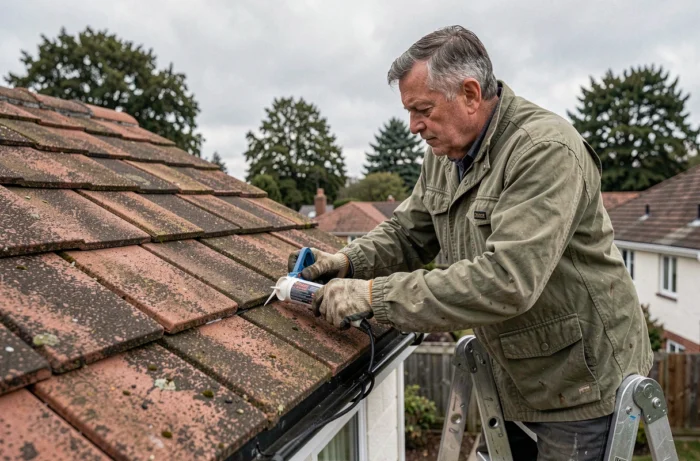
- The roof and gutters: an annual visual inspection and cleaning of the drains prevent infiltrations that degrade the framework and insulation.
- Bathroom and kitchen seals: periodic replacement prevents water from migrating behind the coverings, a source of structural mold.
- The electrical network: in homes built before the 1990s, partial compliance significantly reduces the risk of electrical fires.
- The façades: a facelift with water-repellent treatment protects the building and maintains the performance of external insulation if it exists.
Regular preventive maintenance costs less than emergency repairs. For each area, comparing at least three quotes remains the most reliable method to assess the fair price in your geographical area.
Perfect completion guarantee: an underutilized lever
Upon project completion, the perfect completion guarantee obliges the professional to correct any defects noted for one year. This period runs from the acceptance report. Issuing specific reservations at that moment, even for finishing details, protects the project owner much more effectively than an informal follow-up months later.
Whether the project involves heavy energy renovation or a simple room refresh, this legal mechanism applies as soon as a craftsman or company is involved. Documenting it in writing, with dated photos, transforms a theoretical obligation into concrete protection.