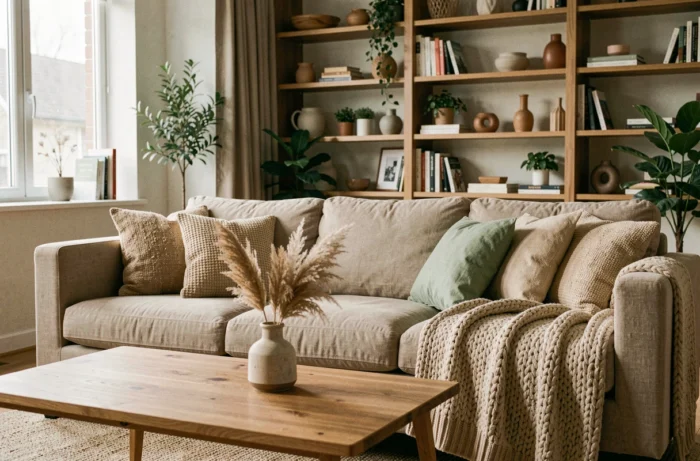
Transforming a house into a trendy cocoon involves choosing between several decor approaches that yield very different results. Materials, color palette, guiding style: each combination alters the perception of comfort and practicality in an interior. Rather than piling up generic tips, this article compares the three cocooning styles that have structured interior decoration in France since 2024 (Japandi, Wabi-sabi, Cottagecore) and measures their concrete impact on the atmosphere of a living space.
Japandi, Wabi-sabi, and Cottagecore: Comparative Table of Cocooning Styles
These three movements share a common foundation (sobriety, natural materials, visual comfort), but their codes diverge on points that radically change the atmosphere of a living room or bedroom.
| Criterion | Japandi | Wabi-sabi | Cottagecore |
|---|---|---|---|
| Dominant Palette | Beige, light gray, matte black | Terracotta, ochre, off-white | Sage green, powder pink, cream |
| Key Materials | Light wood, linen, ceramics | Raw stoneware, patinated wood, raw earth | Floral cotton, wicker, painted wood |
| Furniture | Sleek lines, tapered legs | Irregular shapes, handcrafted pieces | Thrifted furniture, vintage sideboards |
| Sought Atmosphere | Minimal harmony | Authenticity and embraced imperfection | Country nostalgia |
| Suitable for Small Spaces | Yes (native decluttering) | Yes (few objects) | More delicate (decorative accumulation) |
Japandi remains the most accessible for a compact interior: its principle of native decluttering limits the superfluous and facilitates circulation in the room. Cottagecore, on the other hand, requires more space to avoid a cluttered effect.
Several resources detail these approaches according to the type of room; the home articles on Media Gaga specifically address the variation of these trends by use and budget.
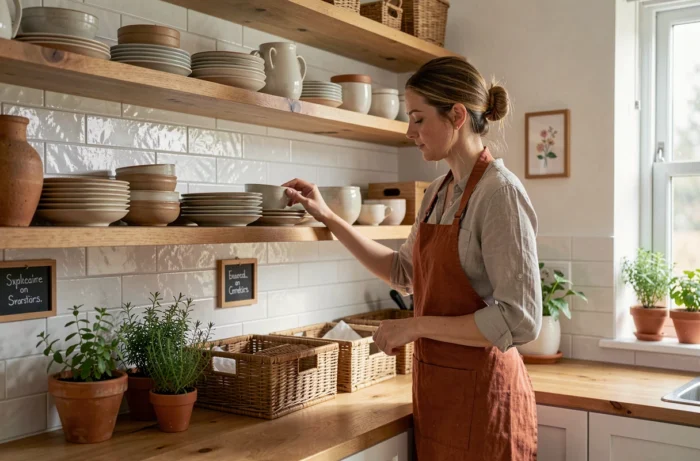
Cocooning Atmosphere Summer vs. Winter: How the Season Changes Material Choices
Most decor guides associate cocooning with thick throws and winter candles. Recent trends show an extension of the concept to warm seasons, with atmospheres referred to as “summer cocoon” based on lightweight fibers.
In winter, thick materials (boucle wool, corduroy) capture heat and visually densify the space. Natural linen, rattan, and sandy tones replace these materials starting in spring to maintain the feeling of comfort without weighing down the room.
This seasonal approach involves thinking about decoration in two textile “wardrobes”:
- Interchangeable cushion covers and throws according to the season, favoring neutral shades for permanent furniture (sofa, base rug)
- Washed linen curtains for summer, lined with blackout fabric in winter, to modulate natural light without changing the rod
- Accessories in rattan or lightweight plant fibers for warm months, stored in favor of stoneware or glazed ceramic pieces in autumn
This system avoids accumulating objects throughout the year. Two textile rotations per year are enough to refresh the atmosphere of a living room without permanent purchases.
Lighting and Colors: Variations that Alter the Perception of a Living Space
The color of the walls and the type of light work together on the perception of volume and warmth in a room. Treating one without the other produces inconsistent results.
Color Temperature and Cocooning Atmosphere
A warm temperature bulb (around 2,700 K) enhances beige, sand, or terracotta tones by giving them depth. The same wall color under cold lighting (above 4,000 K) appears dull and clinical.
Multiplying low light sources (table lamps, string lights, low wall sconces) creates soft shadow areas that enhance the feeling of intimacy. A single ceiling light, even at a warm temperature, flattens the volume and removes that cocoon effect.
Wall and Textile Combination for a Cocooning Living Room
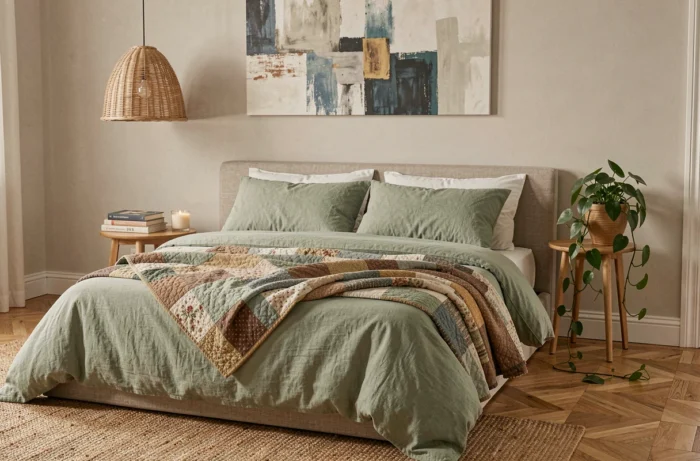
The palettes that work best combine a light wall (off-white, pearl gray) with textiles in a more saturated hue (terracotta, sage green, slate blue). The contrast remains soft, but saturated textiles draw the eye to comfort areas (sofa, armchair, reading nook).
Conversely, painting an entire wall in a strong color and then adding textiles in the same shade overwhelms the room. The operational rule: the wall sets the neutral background, the textile brings the guiding color.
Energy Renovation and Interior Comfort: The Link That Decor Alone Cannot Solve
A cocooning interior loses its effect if thermal insulation is inadequate. Drafts, cold walls to the touch, or temperature variations between rooms negate the benefits of soft materials and warm colors.
Thermal regulations are regularly evolving in France, and renovation aids (like MaPrimeRénov’) are adjusted each year. Checking insulation before investing in decoration avoids compensating for a structural defect with additional layers of textile.
In practical terms, replacing single-glazed windows or insulating an exterior-facing wall changes the feeling of comfort more than changing a sofa. The decoration budget freed up by proper thermal wrapping can then focus on finishes (lighting, quality textiles, durable furniture).
The choice of a cocooning style is best made after a minimal thermal diagnosis. A clean Japandi interior in a well-insulated house produces a sense of calm that the same decor in a leaky home will not replicate. Current trends also associate real thermal comfort with decorative minimalism, with both reinforcing each other rather than substituting for one another.